Dr. Baburam Bhattarai on the Maoist Movement in Nepal: A Reflection
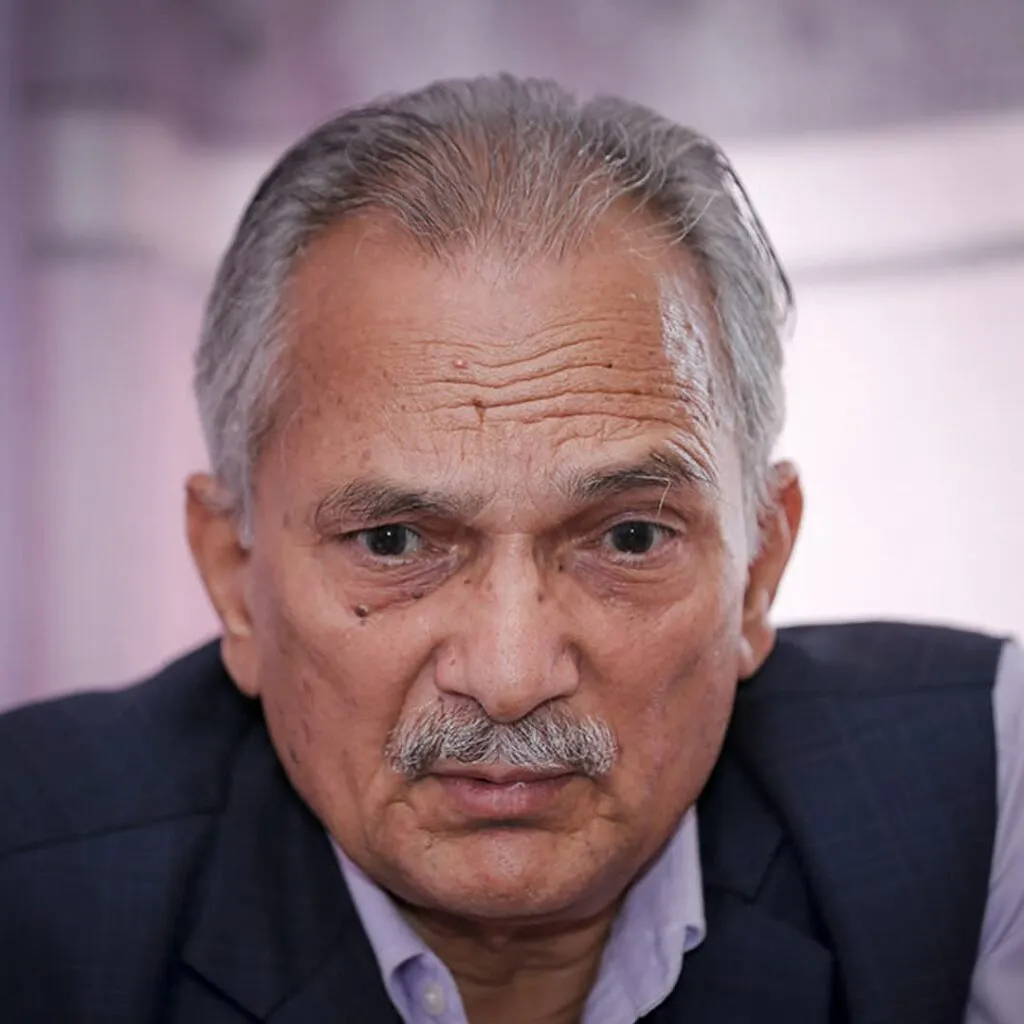

Former Maoist leader and Chairman of Naya Shakti Nepal, former Prime Minister Dr. Baburam Bhattarai, writes the following about the country through social media:
A line of thought seems to be gaining traction among comrades who were once part of the Maoist movement but are now scattered across different factions — “The movement weakened because the leaders split; if everyone could reunite, everything would be fine.”
This is a noble but rather childish understanding. Clarifying this with facts and reasoning would require an extensive discussion, which will happen in due time. For now, it may be appropriate to present some simple questions and answers.
1. Was Nepal’s Maoist movement successful or a failure?
- In short, Nepal’s Maoist movement was relatively successful. In fact, globally, after Cambodia’s revolution in 1975 (which later deviated from its path), Nepal’s was the only successful armed revolution at the end of the 20th century and beginning of the 21st.
(Note: Similar Maoist revolutionary movements across the world either collapsed completely or are barely surviving despite massive sacrifices. For example, in Peru, the founder Gonzalo died in prison after 29 years, and the movement is nearly over. In India, where the struggle began in 1967, the party’s General Secretary recently died in a government operation, and the movement is crawling at a tortoise’s pace. In Turkey, the key leader Abdullah Ocalan has been imprisoned for 26 years and recently unilaterally declared an end to the armed struggle. In the Philippines, the movement ongoing for around 60 years stagnated following the death of founder Jose Maria Sison and the assassination of new leaders by the state.)
2. In what sense was it successful? And why only “relatively” successful?
- Revolutionary movements usually have multiple demands — some primary, some secondary; some immediate (tactical), and some long-term (strategic). Among the 40-point demands presented at the time, the major one during this phase of the revolution was to draft a republican constitution through an elected Constituent Assembly. This demand, along with others like federalism, secularism, women’s rights, Dalit rights, etc., were enshrined in the constitution — which makes it a major achievement of the Maoist movement.
In this sense, the movement was successful.
- The word “relatively” is used because if ideological clarity had been maintained within the party leadership early on, even greater achievements could have been secured. Due to that failure, some opportunities were lost. Furthermore, although we succeeded politically, we did not achieve complete military victory. Hence, because the success came through a peace agreement shaped by internal and external power balances, it is appropriate to call the movement “relatively” successful.
3. Where did the main mistakes occur within the then Maoist party?
- After entering the peace process, if the leadership had correctly assessed the national and international situation and balance of power, more could have been achieved. But the indecisive and opportunistic stance of Chairman Prachanda led to missed opportunities.
- First, during the 2064 BS (2007 AD) Balaju gathering in Kathmandu, Prachanda’s infamous line — “Election of Constituent Assembly on the lips, armed rebellion in the heart” — caused deep division within the party and confusion among the people, leading to long-lasting damage.
- Second, in the 2067 BS (2010 AD) Palungtar extended meeting in Gorkha, the three conflicting lines emerged: Baburam’s for constitution-building, Kiran’s for preparation of rebellion, and Prachanda’s wait-and-see. No decision was taken. Later, at the Central Committee meeting in Kathmandu, Prachanda declared — “Unity with Kiran, struggle with Baburam,” which deepened the divide. Only in the 2068 BS (2011 AD) meeting in Sindhupalchok did Prachanda finally support Baburam’s line of constitution-making, but by then the situation had become quite adverse.
- Third, on 2nd Jestha 2069 BS (May 2012), during my tenure as Prime Minister, we had reached agreement with Congress and UML on key contentious issues: directly elected President (French model), Prime Minister endorsed by Parliament, identity-based 11 provinces, constitutional court, etc. But due to internal opposition, this agreement fell through — which was not just a mistake, but a crime.
Had this agreement held, the first Constituent Assembly could have promulgated the constitution by 14th Jestha 2069, and the Maoist movement’s achievement would be immortalized in Nepal’s history.
4. Then how did Nepal’s Maoist movement succeed when others around the world did not?
- Because we didn’t treat any “ism” as a mechanical dogma, but as a guiding science. We applied it creatively in the context of our own society. Instead of looking only through a class lens, we also addressed caste, region, gender, and community issues.
We adopted a balanced approach between armed and peaceful struggle, rural and urban work, legal and underground activity, national and international politics, political and socio-economic issues, visible and subtle tactics, parliamentary and extra-parliamentary strategies. We were strategic in vision and flexible in tactics.
We demonstrated that revolution and peace are not contradictory, but complementary. That is why Nepal’s Maoist movement differed from others and climbed the ladder of success.
5. Then how did such a revolutionary movement decline?
- The revolution or movement hasn’t completely collapsed. According to the laws of social development, one phase of the revolution — with its own originality — has been completed and transitioned into a new phase.
In the Maoist narrative, the stage of capitalist-democratic revolution has been completed in Nepal. Now we have entered the phase of socialist transformation. The challenge is to understand and implement this transition properly.
The current decline did not emerge overnight. It is the fully grown form of a poisonous tree that began sprouting during the People’s War. Particularly, the development of interest groups around a centralized leadership structure and the reinforcement of those groups through parliamentary politics and power games are the main problems today.
Hence, just as everything has a lifespan, the Maoist movement too has fulfilled the responsibilities of one historical phase. Now, it must be restructured ideologically, politically, culturally, and organizationally to move forward into the next phase.
6. How to reorganize the Maoist movement now?
- In the context of the 21st century and the fourth industrial revolution, and with Nepal having entered the stage of peripheral capitalism under globalized capital, it is no longer sufficient to remain within the old ideological-political confines of “Maoism.” A synthesis of new thoughts, philosophies, and politics rooted in recent advancements in knowledge and science is essential.
For that, Maoist and other communist leaders and cadres must think creatively and take initiatives. Why did past communist regimes fall? Why is parliamentary communism vanishing? These must be examined objectively and synthesized into a new, time-appropriate, and locally-relevant alternative politics.
This is precisely the rationale and essence behind the “Naya Shakti” campaign that we have been advocating for some time now.
- Remember, revolutions and movements are not built by gathering ready-made leaders. A preliminary idea launches a movement, which then nurtures capable leaders, and those leaders further synthesize stronger movements and evolved ideas. This cycle — repeated over time — is the fundamental rule of revolution and transformation.