Constitutional Clause Not Applied to CA Member Subas, But Applied to Former President Bhandari
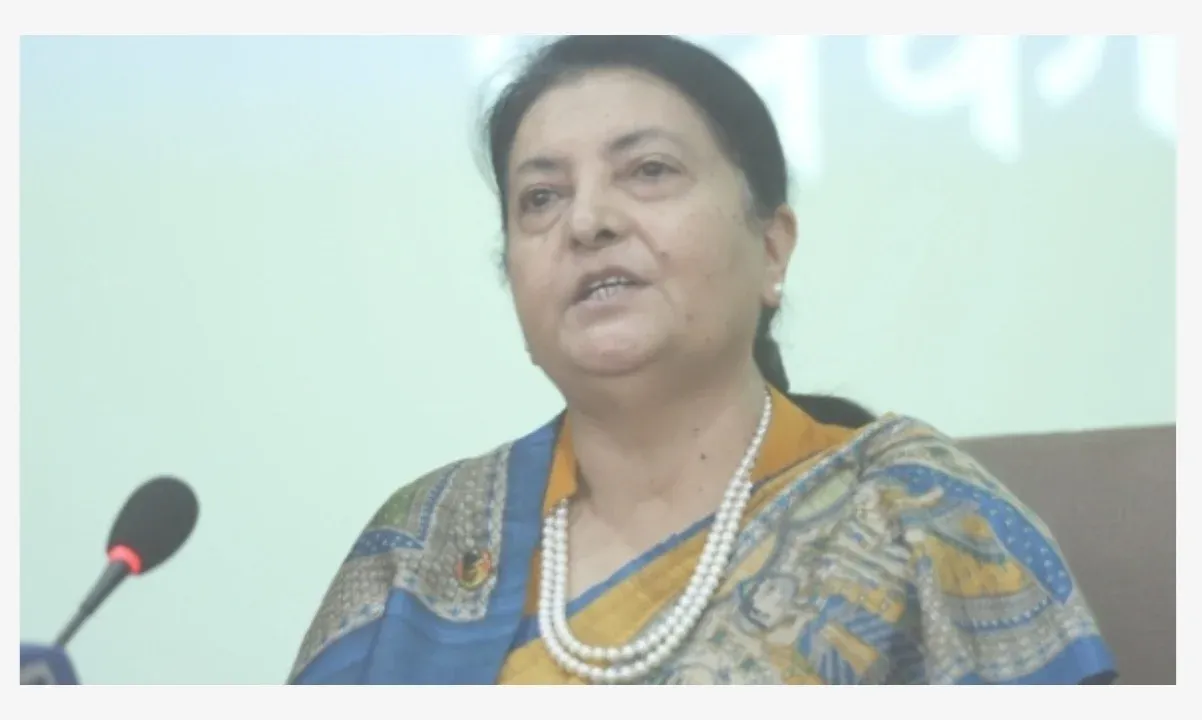

Nepal : Immediately after the conclusion of the Politburo meeting of Nepal’s ruling party CPN-UML, head of the publicity department Rajendra Gautam, while briefing the press, stated: “The issue of renewing former President Bidya Bhandari’s party membership is under consideration.” Gautam referred to the party’s statute and said that Bhandari’s membership renewal remains pending. During the briefing, he made a particularly significant remark by citing Article 8, Clause 1 of the party statute, which discusses voluntary renunciation of party membership. He implied that Bhandari had voluntarily given up her party membership when she became President of Nepal.
This suggests that since Bhandari voluntarily renounced her membership to assume the presidency, the renewal or denial of her membership now rests entirely on the party’s discretion. Moreover, Gautam indicated that in cases of voluntary resignation, party statute treats the matter as requiring new membership, not simply renewal.
In essence, by invoking Articles 8 and 9 of the statute, Gautam appeared to argue that Bhandari’s case falls under new membership, not renewal. UML Chair KP Sharma Oli and leaders close to him seem aligned on the decision not to renew Bhandari’s membership. Even if renewal is allowed, the party appears to be framing it as the issuance of a new membership.
If Bhandari is granted new membership, she would lose the eligibility to contest for leadership roles—including central committee positions—at the upcoming general convention. While Bhandari had previously claimed on Asar 14 that she had renewed her party membership, UML General Secretary Shankar Pokharel also mentioned in a recent interview that Bhandari’s membership had been renewed a year ago. Furthermore, in the Politburo meeting on Shrawan 2, organizational head Kashinath Adhikari admitted to having made a mistake by renewing Bhandari’s membership and even apologized.
These accounts indicate that Bhandari’s membership was renewed a year ago. However, the Politburo meeting on Shrawan 3 contradicted this by stating that her membership remains pending. Simultaneously, the publicity chief’s argument that Bhandari had voluntarily resigned from the party suggests that the Oli faction is strategically building pressure on her.
Historically, in the case of party leaders who assumed constitutional or political appointments, UML has interpreted their roles not as voluntary resignation, but as party-assigned responsibilities. Accordingly, their memberships were renewed afterward. For instance, the party renewed the memberships of former Speaker and Constituent Assembly Chair Subas Nembang and National Assembly Chair Ganesh Timilsina. Based on that renewed membership, Nembang was elected vice-chair during the 10th General Convention.
Analysts believe that by raising different interpretations of the statute, leaders aligned with UML Chair Oli are actively trying to block Bhandari’s return to party leadership. Oli has also argued that someone who has served as the Supreme Commander of the Army—like the President—should not return to active politics. UML is reportedly trying to prevent Bhandari from even becoming a general convention delegate, leading to the current dispute over her party membership.