“From Struggles Behind Bars to the Ladder of Power” — Is Gagan Thapa Next in Line to Become Prime Minister of Nepal ?
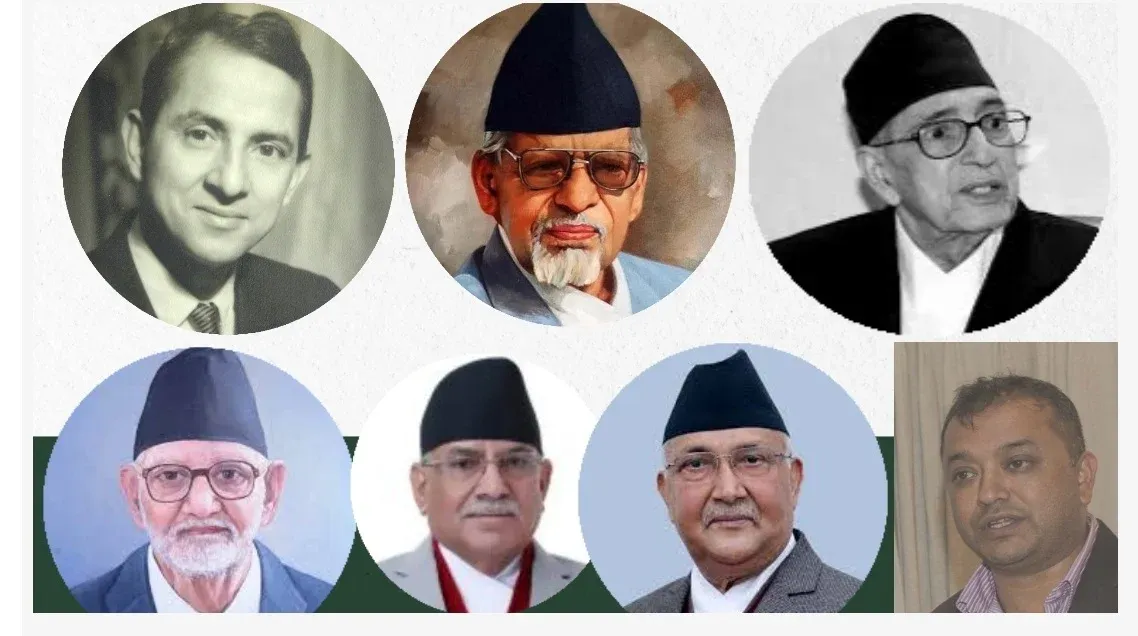

Dipesh Shrestha, Nepal: Nepal’s political history is filled with leaders who endured long years in prison while fighting for systemic change. Many of these figures later rose to lead the country as Prime Minister. In this video, we discuss those leaders who served as Prime Ministers of Nepal after 2017 BS and had previously served time in prison.
B.P. Koirala:
B.P. Koirala spent nearly 8 years in prison, both in India and Nepal, for his efforts to end the Rana regime, especially between 2017 and 2020 BS. Once the movement for political transformation gained momentum, B.P. Koirala was elected Nepal’s first democratically elected Prime Minister in 2015 BS. As the founder of the Nepali Congress and a key figure in initiating parliamentary democracy, his contribution to Nepal remains highly respected.
Man Mohan Adhikari:
Man Mohan Adhikari was imprisoned by the Ranas for nearly 10 years for his involvement in the 2007 BS revolution against their regime. He promoted land reform programs and championed labor rights, which threatened the ruling elite. Eventually, in 2051 BS, he became Nepal’s first communist Prime Minister, recognized for his sacrifices and public-oriented policies.
Krishna Prasad Bhattarai:
A fellow Congress leader, Krishna Prasad Bhattarai spent around 7 years in prison for advocating the reinstatement of constitutional monarchy and multiparty democracy. As a result, he became the head of the interim government in 2046 BS and served another term as Prime Minister in 2056 BS.
Pushpa Kamal Dahal ‘Prachanda’:
Unlike other leaders, Prachanda never went to prison but lived underground for a decade, leading the armed Maoist movement to end the monarchy and establish a federal republic. Though never imprisoned, he lived under constant threat of arrest. After the peace accord following the 2062/63 BS People’s Movement, he became Prime Minister in 2065 BS. Despite resigning soon after, he returned to the post in 2072 BS and again in 2079 BS.
Dr. Baburam Bhattarai:
Another Maoist leader, Dr. Baburam Bhattarai, also spent 10 years underground with Prachanda during the armed insurgency. Arrested multiple times and later released, he eventually became Prime Minister in 2068 BS. Known for his intellectual persona and tenure as Vice Chair of the Planning Commission, he remains a respected figure in Nepali politics.
Khadga Prasad Oli (K.P. Oli):
A key communist leader, K.P. Oli spent a total of 14 years in prison for his opposition to the Panchayat system. Apart from Prachanda and Baburam, he is one of the few communists who spent extensive time behind bars under the former regime. He served as Prime Minister in 2072 BS, again in 2076 BS, and most recently in 2081 BS, continuing to hold the position today.
These leaders reflect a common trend in Nepali politics: those who suffered imprisonment in the pursuit of justice and political reform often went on to lead the nation. Their journeys show how “struggles behind bars” became a “ladder to power.”
Now, as a new generation emerges, who among the young leaders might follow a similar path?
Gagan Thapa, a prominent youth leader from the Nepali Congress, was arrested during the 2062/63 BS People’s Movement against King Gyanendra’s direct rule. He later served as Health Minister and introduced significant reforms, earning him widespread popularity among the youth. Known for his strong oratory and political vision, Thapa represents a new wave of leadership.
Nepal’s political landscape continues to be shaped by a legacy of resistance and reform. With his background, experience, and public appeal, Gagan Thapa stands out as a strong contender for future Prime Minister — a possible next step in the pattern of transformation through struggle.