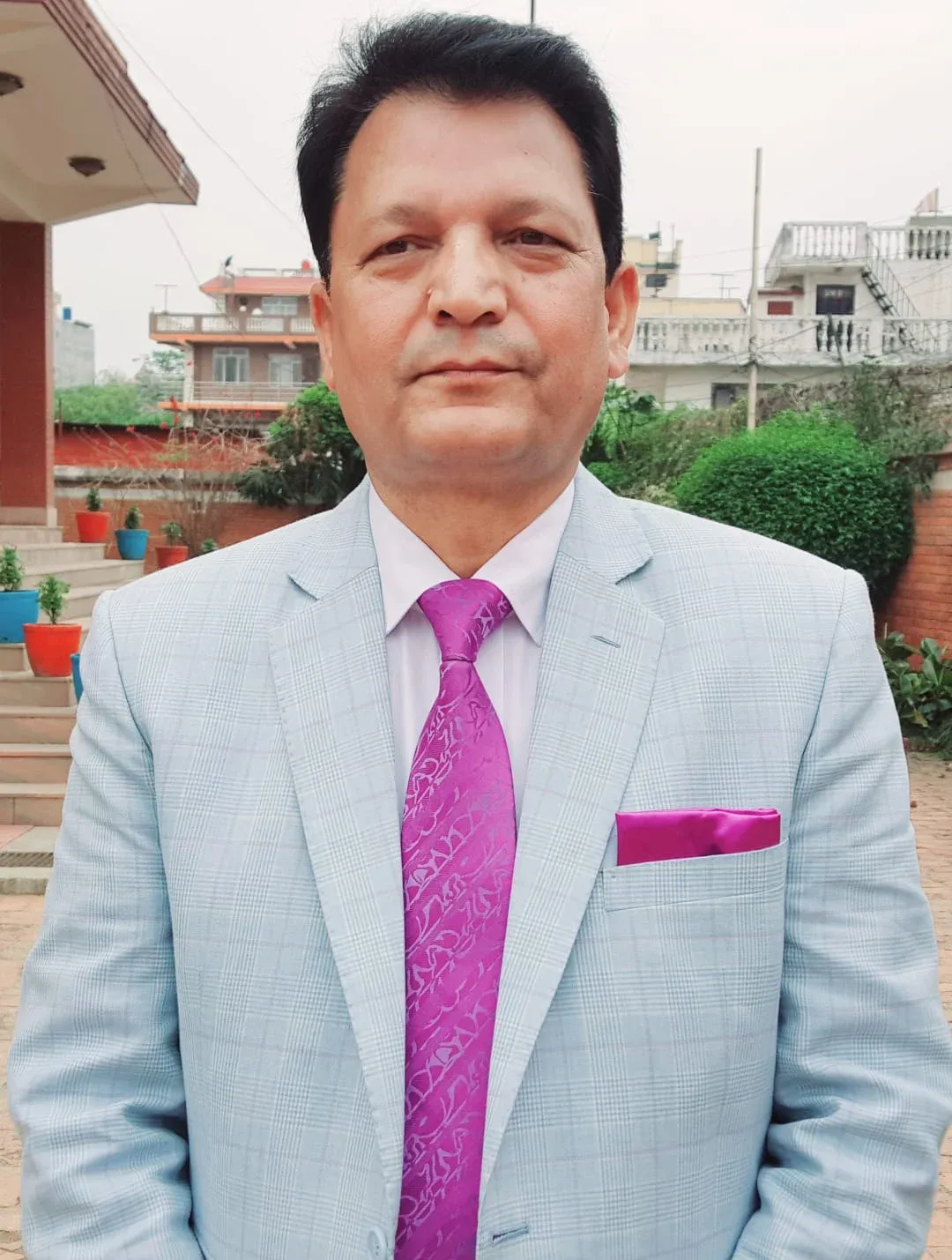

ADVICE TO THE VOTERS OF NEPAL
Esteemed Nepalese Brothers and Sisters of Nepal!
The upcoming election on Thursday 5th March 2026 ( 21st Phalgun 2082) is a crucial moment for Nepal’s democratic future. At this historic moment, all Nepali citizens need to come together and express their solidarity in order to seek the visionary, responsive , democratic, pragmatic leadership. This could be either from any transparent political Party or from independent candidate of Nepal. Safeguarding and strengthening federal democratic democracy, secularism, constitutionalism and human rights of the nation-state is paramount important.
Nepal is a multi-religious, multi-ethnic and multi-cultural country. Diversity is our strength. But today, religious extremism, intolerance and increasing pressure on minority communities pose a serious challenge to our coexistence and democratic values. Such tendencies should be resisted. This is not the time for patriotic, progressive, nationalist citizens to remain silent in the face of increasing lawlessness, misrule, corruption, and the activities of all-embracing and foreign elements in the country.
In this context, we thirty million Nepalese should move forward by collaborating with the Principled, Transparent, Accountable, or effective party, which is committed to the common values of good governance, social justice, and human rights. This cooperation is not for any self-interest, but is a necessary step for the protection of the country’s democratic system, republic, secularism and civil liberties, as well as for radical change and sustainable development in the country.
We have to encourage and promote a candidate for the upcoming parliamentary elections who is committed to a federal republic, religious freedom, human dignity and a welfare state, and who will stand firmly for the rights of all Nepali citizens, especially the marginalized and minority communities.
We are ourselves indispensable for us in this important journey. Your support, participation, cooperation and solidarity are the basis for building a just, inclusive and beautiful, peaceful and economically prosperous Nepal.
Let’s stand together for sovereignty, equity, equality, and justice! Entire Nepal would win if the capable candidate wins our precious vote on the election !
The dominance and misinterpretation associated with high caste in Nepal have hindered principles of equality and equity, resulting in a fragmented and perilous societal structure. This internalized hegemony, influenced by cultural, linguistic, and caste-based hierarchies rooted in Hinduism, has historically allowed a privileged elite to control national identity and governance. Despite various political regimes, including the Rana oligarchy and the democratic period, “elite capture” remains prevalent, with high-caste groups and urban elites exerting significant control over political, economic, and social resources. We Nepali aspire for the newly elected government is to dismantle this hegemony and promote equal opportunities for all, ensuring that diverse groups can participate equally across all sectors of society.
To alleviate and eliminate extreme poverty, inequality, injustice, systemic corruption, weak institutional capacity, sluggish economic growth, and widespread disillusionment, a transformation is essential. This transformation must convert extreme poverty into prosperity, inequality into equality, injustice into justice, systemic corruption into measures that inhibit corruption less institutions, weak institutional capacity into robust institutional capacity, slow economic growth into rapid economic growth, and widespread disillusionment into widespread gratification.
This Transformation can be achieved by empowering the citizens of a nation through a multifaceted process that promotes self-reliance, guarantees equal opportunities, enhances knowledge, and offers meaningful, active participation in governance and the economy.
Nepal is currently experiencing a trajectory of backwardness and stagnation, primarily due to the deceptive promises and aspirations presented by leaders and political figures during election season. This situation is exacerbated by a combination of economic, political, and social deterioration. Our country is one of the signatories on International Human Rights Law, however the meaningful implementation is still lacking.
As the government has not upheld the Human Rights, many conflicts are being sparked or spread by violations of human rights. Poverty is both a cause and a consequence of human rights violations, representing a state of disempowerment where individuals are deprived of dignity, equality, and basic needs like food, housing, and healthcare.
Political leaders and actors must safeguard human rights through effective governance. This includes the Right to live with dignity, the Right to freedom, the Right to equality, the Right to communication, the Right to justice, the Right for victims of crime, the Right against torture, the Right against preventive detention, the Right against untouchability and discrimination, the Rights related to property, the Right to freedom of religion, the Right to information, the Right to privacy, the Right against exploitation, the Right to a clean environment, and the Rights related to education.
Individuals who have instigated severe arson across the nation, have exploited the protests of Generation Z, and maneuvering the deaths of young protestors, while white-collar criminals and embezzlers are misleading voters through surreptitious and manipulative language, emotional appeals, and hyperbole in their quest for power. When leaders issue promises that are unfulfilled, exaggerated, or deliberately misleading, it establishes a “feedback loop” of decline, especially when policies are driven by populist, short-sighted, or corrupt intentions.
Surreptitiously, Covert and Opaque leaders undermine the essential trust, morale, and transparency necessary for effective governance and means to win hearts and minds of the people. Ironically, their actions have created a detrimental atmosphere that suppresses creativity and promotes fear and uncertainty throughout the country.
Therefore, it is strongly urged that when you cast your vote, you need to refrain from supporting the thugs, arsonists, swindlers, and fraudsters. We, the thirty million citizens, are the stakeholders representing the loyal citizens of the nation, as we contribute taxes for the benefit of the country. We do not pay taxes solely for the advantage of a select ruling class elite in Nepal who are infringing upon the human rights of the populace.
A leader must have the ability to ensure that the essential infrastructure for development, which represents the basic needs of humanity, includes vital physical and social systems that establish a minimum standard of living and promote economic advancement and quality life of the taxpayers. This encompasses hard infrastructure, such as transportation systems (roads, bridges, airports), energy (dependable electricity, renewable sources), water and sanitation (clean water supply, sewage treatment), and telecommunications (high-speed internet). Soft infrastructure includes education (access to schools, vocational training), healthcare (hospitals, clinics), affordable housing, and public safety services.
A national leader must lead the country with a driving passion and clear vision, which should create a constructive and pragmatic new narrative. The leader will emancipate over 30 million Nepalese, both domestically and in the diaspora, from their challenges in pursuit of an improved quality of life. In doing so, they will salvage Nepal and its citizens through a combination of ethical, economic, and strategic initiatives designed to reestablish stability, unity, and prosperity.
A national leader is essential for steering the political landscape of a country, an individual who emphasizes their contributions to the nation over personal gains, exemplified by figures such as Dr. Nelson Mandela of South Africa, Mahatma Gandhi of India, former President John F. Kennedy of the USA, and the Supreme Leader Late Ganesh Man Singh of Nepal.
A leader must be able to mobilize both the software and hardware assets of a nation to ensure national security, foster economic stability, and drive rapid development in an era dominated by digital infrastructure. Controlling these assets allows for effective crisis management, such as pandemics, and enables the swift implementation of digital public infrastructure (DPI) to deliver services efficiently.
A leader must be skilled at maintaining bilateral, multilateral, and unilateral relationships because this combined, flexible approach allows them to handle diverse challenges, from swift, individual actions to complex, shared global crises. Mastering these varied approaches enables leaders to build trust, foster collaboration, maximize resources, and exert influence efficiently.
A national leader must lead the country with a driving passion and clear vision, which should create a constructive and pragmatic new narrative. The leader will emancipate over 30 million Nepalese, both domestically and in the diaspora, from their challenges in pursuit of an improved quality of life. In doing so, they will salvage Nepal and its citizens through a combination of ethical, economic, and strategic initiatives designed to reestablish stability, unity, and prosperity just like Abraham Lincoln’s as the 16th U.S. President (1861–1865) preserved the Union during the Civil War, abolishing slavery through the Emancipation Proclamation (1863) and the 13th Amendment, made the United States more powerful modernizing the federal government and U.S. economy. His leadership strengthened the nation by cementing federal authority, fostering economic growth through industrial expansion, and advancing civil rights.
We must use our the sensory awareness to cast our vote to the leaders who have following indispensable characteristics:
INTEGRITY
He or she must be a person of standing, willing to sacrifice self and personal interest for the interest of the public/country and always stand for what is right for the benefit of his people against themselves.
HONESTY
He or she must be trusted, relied upon and is very truthful in discharging his leadership duties at all times, both in his/her private and public life.
FAIRNESS
He or she must exercise justice with objectivity and treat everyone as equal, elimination of favoritism, discrimination and voter-favor.
ACCOUNTABILITY
He or she must take responsibility and liability over his or her actions and allow others to observe and evaluate his performance. He shall be answerable to all actions and inactions.
TRANSPARENCY
His or her public decisions and actions must be visible to the public. His or her life and dealings must be open to public scrutiny, and nothing is hidden from the public. Leaving footprints and trails of evidence open for public to gage and grace
SERVITUDE
He or she must be a servant for the people he represents and not a master over his people, asserting authoritarian rule. Having the knowledge and the know-how that enables delivery of services, developing policies and making laws in the Parliament that are direly missed by the voters using available resources.
HUMILITY
He or she must be humble at all times in living and leading his or her life as a leader and not hide behind the laws of “not guilty until proven guilty”.
ETHICAL
He or she must be a person who stands for what is right and correct in the eyes of law and social norms. He or she does not compromise his or her public responsibility by sweets and lures.
Furthermore, a leader aspiring to become the President, Prime Minister, minister, or Parliament Member must possess a comprehensive knowledge on local, provincial, and national strategy aimed at the overall development of the nation. It is essential for them to prepare and present to the people of Nepal a clear leadership manifesto, along with the necessary local, provincial, and federal all three level strategic plans that encompass a vision, mission, and statement aligned with the core values of the nation.
Famous Philosopher and economist Adam Smith viewed agriculture as the foundational, most productive sector of an economy, arguing that it creates wealth by both feeding the population and providing raw materials for manufacturing. He believed that in a “natural” economic order, capital should flow first to agriculture, then to manufacture, and finally to foreign commerce, promoting sustainable development.
As Nepal is an agricultural country, the leaders must bring Agricultural revolutions which will act as fundamental catalysts for national development by transforming subsistence farming into high-yield, commercial systems. These revolutions boost food security, support rapid population growth, and release labor from rural areas to drive industrialization and urbanization.
Youth are the most valuable wealth of a nation, acting as the primary drivers of economic engine, political, and social transformation through their energy, creativity, and adaptability. As the backbone of a country, they fuel development via technological innovation, entrepreneurship, and leading social reforms. Their potential for positive, sustainable change makes them the ultimate investment for future stability and prosperity.
Thousands of youths continue to leave the country at an alarming rate due to the sluggish economy. On average, 8 million migrant workers, mostly employable youths, leave the country daily, mainly to the Gulf countries to escape existing poverty, limited employment opportunities, and deteriorating agricultural productivity. However, their life still seems to be worsening because of the extreme physical and mental torture they have to face at their jobs abroad.
They leave with flower garlands around their necks, yet tragically return in coffins, transforming what should be a source of national wealth into a period of national mourning.
Youth are the foundation of a nation’s growth. The statement “youth are the eye, mouth, ear, brain, and blood of the country” is a powerful metaphor highlighting that young people are not merely future leaders, but the active, essential components of a nation’s present functioning, vitality, and progress.
This metaphor breaks down the role of youth into critical, life-sustaining functions:
The Eye (Vision & Oversight): Youth provide a fresh perspective, observing societal flaws, corruption, and injustice that older generations might overlook or accept. They look ahead and define the future direction of society.
The Mouth (Voice & Advocacy): Youth are the vocal advocates for change, speaking out against oppressive regimes, police brutality, and unfair laws. They act as communicators, demanding accountability, rights, and equality.
The Ear (Awareness & Listening): Youth are tuned into modern, global trends, technological advancements, and the immediate needs of the population. They are attuned to the “voice of the time,” allowing them to connect with the community.
The Brain (Innovation & Intellect): As the intellectual force, youth bring creativity, modern solutions, and new ideas to solve old problems. They are, as noted, the “third eye” and “fuel” of the nation, providing critical thinking and analytical skills to overcome challenges.
The Blood (Vitality & Energy): Youth represent the lifeblood—the energy, passion, and enthusiasm required to drive development. They are the active force, often referred to as the backbone, providing strength and stamina for nation-building.
Significance:
Active Participants: Youth are the “backbone of the nation” and are often the driving force behind positive social and economic transformation.
Agents of Change: They are, in essence, the “change-makers” of a community, essential for achieving development goals and promoting equality.
The Future: They are the “hope of the motherland ,” holding the power to shape the nation’s destiny through their actions.
Role of Youth in Shaping Society: Youth are the foundational, dynamic engine of society, driving development, innovation, and social change through their energy, creativity, and, in many cases, digital fluency.
Preventing brain drain in Nepal is essential and necessitates a comprehensive strategy aimed at generating economic opportunities, enhancing governance, and improving the quality of life to retain skilled individuals through pragmatic and skilled based education.
Important strategies involve promoting support and implementation, as well as modernizing agriculture and industrialization. Some of the strategies are stated below:
Job Creation & Economic Incentives:
Startup Support
Competitive Salaries
Industrial Growth
Educational Reform
Modernize Curriculum
Improve Institutions
International Partnerships
Artificial Intelligence
Skilled Based Education
Governance & Environmental Improvements
Merit-Based System
Reduce Corruption & Political Stability
Infrastructure Development
Incentivizing Returnees
Brain Gain Programs
Support for Professionals
These actions require a collaborative effort between the government, private sector, and civil society to build a nation where opportunities are available, and talent is valued.
Voters are encouraged to be impartial in their choice of candidate. Do not sell your votes for money, material benefits or any form of inducements.
Do not vote when driven by future selfish interest and intent. Vote for the right candidate with the right qualities and high moral standards. Your vote is your voice. Your vote is your investment. Speak up for the right candidate. Invest your right where you will make a sweet harvest in abundance in the future.
In conclusion, a leader should serve as a role model that requires consistently embodying positive values, practicing integrity, and demonstrating resilience to inspire others. Key actions include “walking the talk” by aligning words with actions, treating others with respect, maintaining a positive attitude, and taking responsibility for mistakes. It is about guiding through example rather than just advice. The future of Nepal indeed lies on your vote.
Respectfully /Appreciatively Submitted by
Dr. Simon Peter D.Litt.
Founder, President and Director
National Human Rights Forum Nepal