Ganesh Parajuli: From the Voice of the People to Parliament
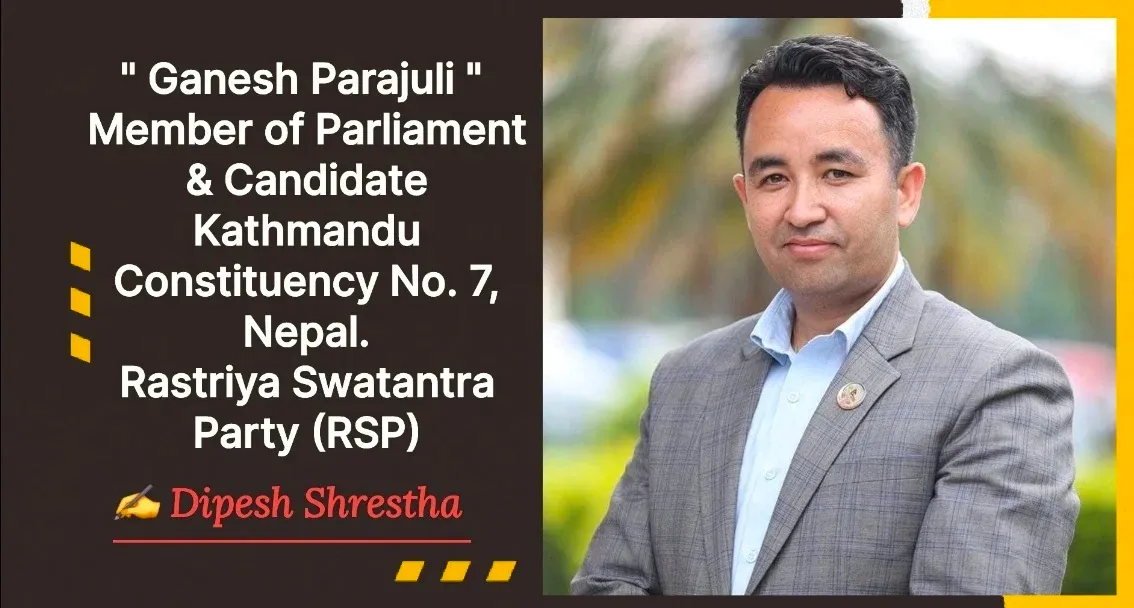

Ganesh Parajuli
Member of Parliament & Candidate
Kathmandu Constituency No. 7, Nepal
Rastriya Swatantra Party (RSP)
Profile Overview:
Dipesh Shrestha, Ganesh Parajuli is a Nepali parliamentarian and reform-oriented political leader representing Kathmandu Constituency No. 7. A member of the Rastriya Swatantra Party (RSP), he is widely recognized for his citizen-centric approach, emphasis on accountability, and advocacy for systemic political reform. With roots in rural Nepal and experience in both entrepreneurship and parliamentary practice, Parajuli represents a new generation of leadership challenging Nepal’s traditional political culture.
Early Life and Background:
Parajuli was born in Khotang District, a hilly region in eastern Nepal, into a modest farming and working-class family. His upbringing in a rural setting exposed him early to economic hardship, governance gaps, and unequal access to public services. These formative experiences shaped his long-standing commitment to social justice, transparency, and inclusive development.
He completed his formal education up to the Proficiency Certificate Level and complemented his academic background with practical experience in business and community engagement. His early professional life in entrepreneurship and management brought him into direct contact with employment challenges, service delivery failures, and citizen–state interactions at the grassroots level.
Social and Civic Engagement:
Before formally entering politics, Parajuli was actively involved in civic campaigns focused on public health, safety, civil rights, and good governance. After relocating to Kathmandu, he became deeply engaged with urban policy issues such as traffic congestion, waste management, drinking water supply, public transportation, youth employment, and access to basic services.
His working style has consistently emphasized public dialogue—community meetings, stakeholder consultations, and citizen hearings—as tools to identify problems and pressure institutions toward practical solutions.
Political Career:
Parajuli entered formal politics with the establishment of the Rastriya Swatantra Party, a political force positioning itself as an alternative to Nepal’s traditional parties. From the party’s early phase, he played a key role in organizational development, policy discussions, and public outreach.
In the 2022 general elections (2079 BS), he was directly elected to the House of Representatives from Kathmandu Constituency No. 7. During his parliamentary tenure, Parajuli gained attention for arguing that Parliament must function beyond rhetoric—as an institution to raise citizen concerns, ensure executive accountability, and influence evidence-based policymaking.
He actively participated in parliamentary committees, raised questions on issues of public interest, and maintained continuous engagement with constituents outside Parliament—an approach that set him apart from conventional legislative practices.
Legislative Focus and Constituency Work:
As a Member of Parliament, Parajuli has focused on:
# Urban infrastructure and service delivery (roads, drainage, water supply).
# Public transportation and urban planning.
# Education and healthcare access.
# Youth employment and entrepreneurship.
# Institutional accountability and transparency.
He regularly conducts neighborhood dialogues and citizen consultations in Kathmandu–7, coordinating with relevant authorities and advocating for timely administrative action.
Current Political Context:
Following the Gen Z–led civic movement in Falgun 23/24, the subsequent dissolution of Parliament, and the formation of an interim government that called fresh elections, Parajuli has once again emerged as a parliamentary candidate from Kathmandu–7.
He enters the new electoral contest with prior legislative experience and a refined reform agenda, emphasizing system change over personality-driven politics.
Policy Priorities:
Parajuli’s core commitments include:
# Zero tolerance for corruption.
# Strengthening state responsibility in education and healthcare.
# Long-term, sustainable urban management.
# Employment generation and entrepreneurship for youth.
# Institutionalized, direct dialogue between Parliament and citizens.
# Regular public reporting and post-election accountability.
Political Philosophy:
Within the Rastriya Swatantra Party, Parajuli is regarded as a key figure in strengthening organizational capacity, clarifying policy direction, and expanding grassroots engagement. He views politics not as a career, but as public service—measured by results, integrity, and transparency rather than longevity or personal power.
Public Image:
Ganesh Parajuli is increasingly perceived as a credible alternative to entrenched political actors in Kathmandu–7. His trajectory—from rural Nepal to the national Parliament—reflects a leadership narrative driven by responsibility, reform, and citizen empowerment rather than personal ambition.