PM Balen Shah Calls for Climate Justice, Compensation and Global Action at UN
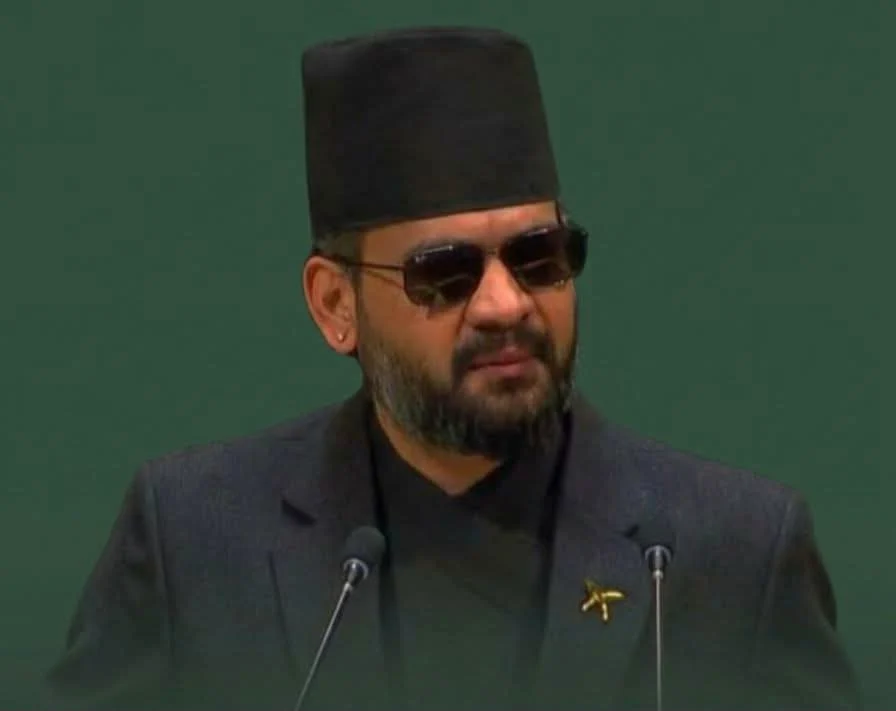

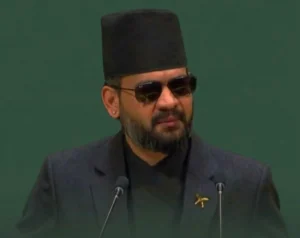
GNN, NEW YORK: Prime Minister Balendra Shah has called for stronger international action on climate change, climate justice, disaster response and global cooperation, saying that Nepal is paying a heavy price for a crisis it did little to create.
Addressing the 81st session of the United Nations General Assembly in New York, Shah described the recent Bhotekoshi–Trishuli disaster in Nepal as more than a local tragedy, calling it a warning to the entire world. “The Bhotekoshi–Trishuli disaster was not merely a local tragedy; it was a warning to the world,” he said.
Shah stressed that climate change recognises no national borders. Glaciers and floods, he noted, do not require passports or visas to cross boundaries. He said Nepal contributes less than 0.1 per cent of global greenhouse gas emissions, yet its people are facing disproportionate consequences from a crisis they did not create.
The Prime Minister argued that climate justice must not remain merely a phrase in United Nations documents. He said affected communities must be given the resources and opportunity to build their futures rather than being repeatedly forced to rebuild what disasters have destroyed.
Highlighting the global significance of the Himalayas, Shah said the region should not be viewed as being on the margins of the Earth. Instead, he described the Himalayas as a vital part of the planet’s life-support system and called for the mountain region to become a laboratory for international cooperation rather than a boundary defined by fragmented information.
Shah also called for a faster and less bureaucratic international response to disasters. Drawing an analogy with a house on fire, he said people would not be asked to fill dozens of forms before receiving immediate assistance. “We act immediately,” he said, stressing the need for rapid and effective mechanisms for countries facing climate-induced disasters.
The Prime Minister further questioned the imbalance in global supply systems, saying the international community had developed highly efficient systems for delivering weapons for warfare but comparatively weak systems for delivering food and essential goods. He argued that if weapons can be delivered anywhere in the world within 72 hours, there should be no excuse for failing to provide farmers with the means necessary for a dignified livelihood.
Calling for a broader approach to disaster recovery, Shah said the international response should encompass “relief, rehabilitation and reconstruction”, while also addressing “responsibility, compensation and resilience”. His remarks placed loss and damage, climate finance and long-term resilience alongside immediate humanitarian assistance.
Shah also linked climate vulnerability with the wider consequences of global conflict. He said Nepal was suffering from a climate crisis that it had not intensified while also experiencing the repercussions of wars that it had not started.
His address comes as Nepal seeks greater international attention to the devastating Bhotekoshi disaster and the wider climate risks facing the Himalayan region. Ahead of his General Assembly address, Shah also discussed the disaster and climate-related risks with UN Secretary-General António Guterres, including riverbank resettlement, green reconstruction and support related to Nepal’s transition from the Least Developed Country category.
Concluding his address, Shah invoked Nepal’s spiritual and cultural heritage, saying: “May Lord Pashupatinath bless the well-being of the world. May the world be able to follow the path shown by Buddha. Namaste.”