From Electrical Engineer to Energy Minister and Party Leader: Kulman Ghising’s Journey Through Ups and Downs
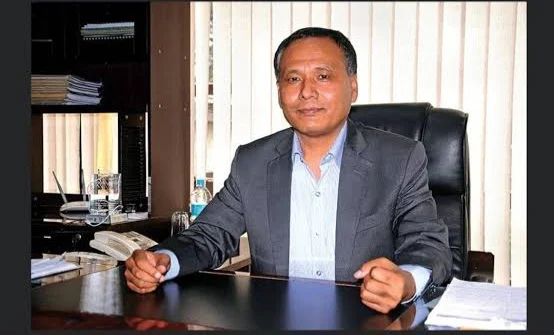

GNN, Dipesh Shrestha- Kulman Ghising’s journey is different from that of an ordinary engineer pursuing a conventional professional career. Born on 26 November 1970 (10 Mangsir 2027 BS) in the then Bethan Village Development Committee of Ramechhap, Ghising completed his education up to Grade 6 at a local school before moving to Kathmandu in 2039 BS (1982/83) to continue his studies at Amar Adarsha Secondary School. He passed the School Leaving Certificate (SLC) examination in 2043 BS (1986/87). He then completed his Intermediate of Science (I.Sc.) at Amrit Science Campus in Lainchaur and went to India on a scholarship to study Electrical Engineering. After returning to Nepal, he completed a master’s degree in Power System Engineering from Pulchowk Engineering Campus and later pursued postgraduate studies in business administration while in service. His academic path therefore combined technical expertise with a gradual development of managerial and administrative skills.
After completing his Electrical Engineering degree in India and returning to Nepal, Ghising began his professional career at the Nepal Electricity Authority (NEA) around 1994 as a seventh-level engineer. He subsequently served in various positions within the authority, gaining experience in project management and power-system operations and gradually advancing to senior positions. After being promoted to director in October 2014, he served for a period as the Project Director of the Rahughat Hydropower Project. Earlier, while serving as Managing Director of Chilime Hydropower Company, he had established a distinct reputation in Nepal’s energy sector through his approach to project management and the involvement of local communities in hydropower development.
Ghising’s professional career, however, was not a continuous upward trajectory. After returning to the NEA from Chilime, publicly available accounts indicate that he spent a considerable period without a major responsibility. He later received the opportunity to lead the Rahughat project. These ups and downs nevertheless enabled him to acquire extensive institutional knowledge of the NEA’s organisational structure, generation and transmission systems, and project management. Thus, when he emerged as a leading contender for the authority’s highest executive position in 2016, he already had more than two decades of institutional experience behind him.
On 14 September 2016 (29 Bhadra 2073 BS), the Council of Ministers appointed Ghising as Executive Director of the Nepal Electricity Authority. At the time of his appointment, Nepal was experiencing prolonged daily power cuts. As Executive Director, he focused on managing electricity availability, improving system operations and making more effective use of available generation. The process of reducing load-shedding in Kathmandu Valley began during the Dashain–Tihar period of 2016, followed by improvements in electricity supply to industrial areas. This period transformed Ghising from a technical official within the electricity authority into a nationally recognised public figure.
His first term ended on 13 September 2020 (28 Bhadra 2077 BS). After completing the four-year tenure and leaving the NEA, public pressure and debate emerged over his possible reappointment. Following a period during which the authority’s leadership remained unsettled, the government appointed Hitendra Dev Shakya to the position. However, in August 2021, the government decided to reappoint Ghising as Executive Director, and his second term began on 11 August 2021 (27 Shrawan 2078 BS). During his second tenure, the expansion of electricity generation, transmission and distribution systems remained among the major areas of responsibility. At the same time, disputes concerning electricity tariffs for industries under the Dedicated Feeder and Trunk Line arrangements became a prominent issue associated with the NEA leadership.
Towards the end of his second tenure, relations between Ghising and the government became increasingly strained. Disagreements emerged over his performance, ministerial directives and issues surrounding Dedicated and Trunk Line electricity tariffs. The government also sought clarification from Ghising. He presented his performance agreement and evaluation as part of his defence. Ultimately, in March–April 2025 (Chaitra 2081 BS), the government removed him from the post of Executive Director of the NEA. Ghising subsequently approached the court against the decision, while the matter continued to generate legal and political debate. His removal marked another major turning point in his professional and administrative career.
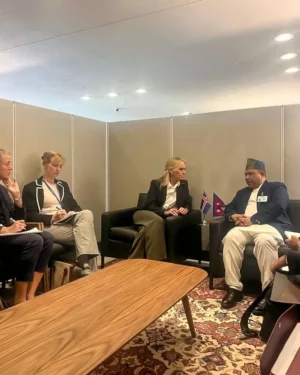
After leaving the NEA, Ghising’s career shifted from technical and managerial leadership towards direct political responsibility. Following the Gen Z-led movement in September 2025, he joined the interim government led by Sushila Karki and assumed responsibility for the Ministry of Energy, Water Resources and Irrigation on 15 September 2025 (30 Bhadra 2082 BS). Within the same Cabinet, he was also assigned responsibility for the Ministry of Physical Infrastructure and Transport and the Ministry of Urban Development. According to official records of the Ministry of Energy, Water Resources and Irrigation, Ghising served as minister from 15 September 2025 to 7 January 2026 (23 Poush 2082 BS), making his ministerial tenure 115 days.
His appointment as a minister expanded his role beyond the management of the electricity authority. He entered the direct sphere of government policy-making and state administration. However, questions arose over his involvement in political activities while serving as a minister in a government preparing for elections. Ghising resigned from the ministerial position on 7 January 2026. His political journey subsequently became more explicit. Although there were efforts towards political cooperation and possible unification with the Rastriya Swatantra Party, the arrangement did not develop into a lasting political partnership. Ghising later moved into the leadership of the Ujyalo Nepal Party and sought to enter Parliament through a direct electoral contest.
In the House of Representatives election held on 5 March 2026 (21 Falgun 2082 BS), Ghising contested Kathmandu–3 as the chairperson of the Ujyalo Nepal Party. According to the election results, he received 11,171 votes but was not elected to the House of Representatives.
Ghising’s latest chapter therefore traces a distinctive progression: from an electrical engineer to a senior manager within the Nepal Electricity Authority, to its Executive Director, then to Nepal’s federal Minister for Energy, Water Resources and Irrigation, and ultimately to the leadership of a political party. His public career has been shaped by his technical background, managerial experience at Chilime and the NEA, disputes with the government, a brief period of ministerial responsibility and his subsequent transition into electoral politics. While his original professional identity lies in electrical engineering, these successive roles have progressively expanded his public profile from the technical and administrative sphere into national political leadership.