Government Steps Up Rehabilitation Efforts After Bhotekoshi Flood, 11,884 Rescued


DIPESH SHRESTHA, GNN – KATHMANDU — The Nepal government has intensified rehabilitation efforts following the devastating floods in the Bhotekoshi River in Rasuwa, alongside ongoing search, rescue and relief operations. The government said it is prioritising the protection of affected communities, medical treatment and psychosocial support while mobilising personnel according to needs. A total of 2,653 people have received shelter and relief at 19 temporary shelters in flood-hit areas of Nuwakot, with additional shelter and assistance provided to displaced people from Rasuwa. The government has released a further Rs1 billion for flood-affected areas.
Major damage to roads and bridges
The floods have caused extensive damage to transport infrastructure. Around 82 kilometres of the Galchhi–Betrawati–Rasuwagadhi road section has been damaged, including 40 kilometres that has been completely destroyed and 16 kilometres that has sustained partial damage. The Krishnabhir and Parewabhir sections of the Prithvi Highway have also been affected. Of the 48 suspension bridges damaged by the floods, 20 can be repaired while 28 will have to be reconstructed. Traffic has resumed in several sections of the Prithvi Highway after debris was cleared from Galchhi, Baireni, Jarikhet, Pokhare, Mungge and Galoudi. Bailey bridge construction is under way along the Galchhi–Devighat section, while preparations have also begun to install a Bailey bridge at Betrawati. The floods swept away 31 motorable bridges, with Bailey bridges planned at three locations.
Health surveillance and emergency response intensified
The government has also prioritised the prevention of potential disease outbreaks in the aftermath of the disaster. The Health Crisis and Disaster Management Unit and the Health Emergency Operations Centre are coordinating infectious disease surveillance and emergency health responses. A Post-Disaster Communicable Disease Surveillance and Response Plan has been approved, while health officials at provincial and district levels have received relevant training. Specialised medical teams, field epidemiology-trained personnel and medical surveillance officers supported by the World Health Organisation have been deployed to affected areas. The government has also activated the SORMAS system to monitor fever and diarrhoeal diseases, while ambulance services, mental health counselling and sanitation activities have been stepped up.
11,884 rescued, nearly 4,000 still unaccounted for
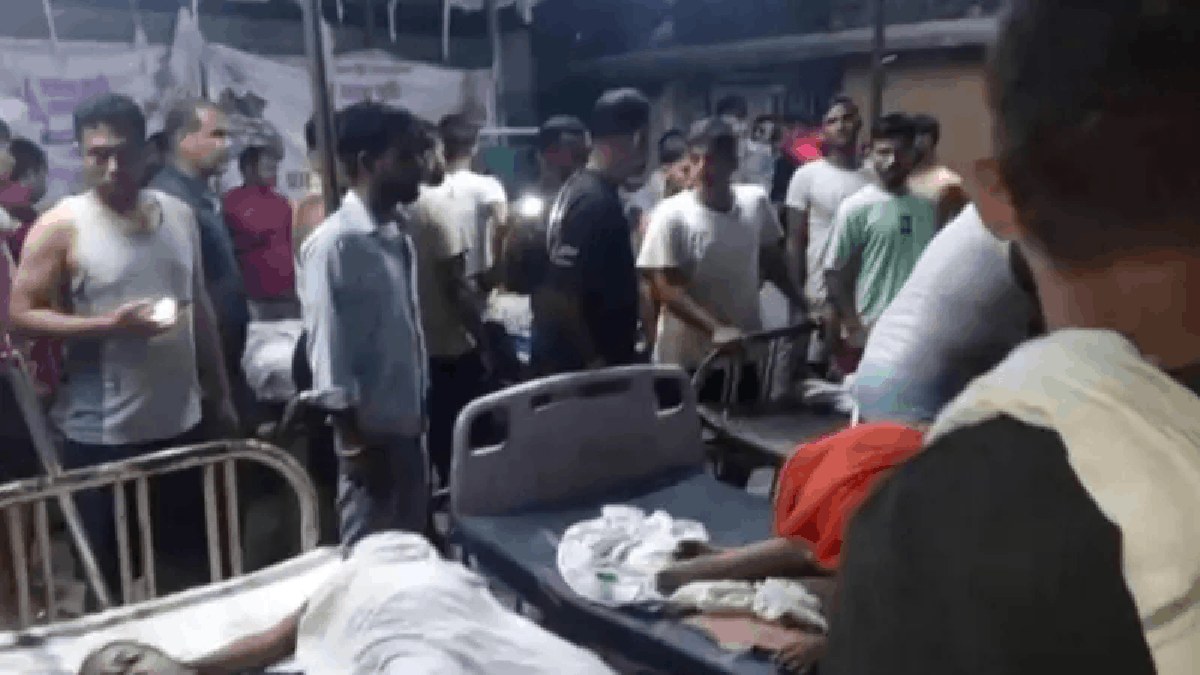
The government said 11,884 people have so far been rescued, while 3,916 people remain unaccounted for. Of the 292 injured people rescued from affected areas and admitted to various hospitals, 182 have already been discharged. At present, 2,466 people are staying at holding centres in Nuwakot, 260 in Dhading, 398 in Rasuwa and 329 in Kathmandu. The government said unidentified bodies are being managed after completing the required legal and scientific procedures. According to the latest government figures, 1,050 bodies have so far been recovered.
International assistance continues to arrive
Financial and humanitarian assistance from both domestic and international sources continues to reach Nepal. By midday, Rs6.366 billion had been deposited into the Prime Minister’s Disaster Relief Fund through accounts at nine commercial banks. Following the release of Rs1 billion for affected areas, the fund has a remaining balance of Rs5.366 billion. A further US$6.11 million has been deposited into accounts maintained by Himalayan Bank and Laxmi Bank. India has provided 68.5 tonnes of relief materials and dispatched an 11-member rescue team to Nepal. China has pledged Rs300 million and supplied 50 tonnes of relief materials. Pakistan is sending 86 tonnes of relief supplies, while Sri Lanka has pledged US$1 million. The government said commitments for financial and humanitarian assistance have also been received from the United States, Australia, the United Arab Emirates, Switzerland, the United Kingdom, Japan and various international organisations.
DNA testing arranged to identify victims
The government has introduced DNA testing facilities to help identify bodies recovered from the disaster. Nepali and foreign nationals seeking to identify recovered bodies or human remains can provide DNA samples from a close blood relative, including a father, mother, son or daughter. Relatives can contact Nepal Police Hospital in Maharajgunj or the nearest district police office with two passport-sized photographs. Relatives living abroad can undergo DNA testing in their respective countries and send the results to the official email address of Nepal Police for comparison. The government said unidentified bodies are being handled in accordance with the law while preserving necessary scientific evidence for future identification.
Government links disaster risk to climate change
The government has described the Bhotekoshi flood as a serious Himalayan disaster potentially linked to the impacts of climate change. Based on consultations with experts, it said the disaster may have been triggered by a large-scale ice-rock avalanche in the Himalayan region, which sent a massive volume of ice and water into the Bhotekoshi River. Preliminary assessments suggest that the collapse of a substantial mass of glacier ice from a high elevation generated enormous energy, causing ice and water to melt and transform into a devastating flood.
The government has said temperatures in the Himalayan region have risen by as much as 1.8 degrees Celsius due to climate change, increasing the risk of similar disasters. It has stressed the need to raise the impacts and risks of climate-induced disasters strongly before the international community and to promote disaster preparedness and response as a shared global responsibility.