Saudi Arabia’s Multi-Billion-Dollar Defence Network Faces Growing Threat from Houthi Missile and Drone Attacks

GNN, SAUDI – Saudi Arabia’s vast defence spending and sophisticated air-defence capabilities are facing renewed scrutiny as missile and drone attacks attributed to Yemen’s Houthi movement expose vulnerabilities around the kingdom’s airports, energy infrastructure and other strategic assets. Despite investing heavily in advanced military technology, Riyadh continues to face the challenge of protecting a geographically extensive network of critical facilities from increasingly complex aerial threats.
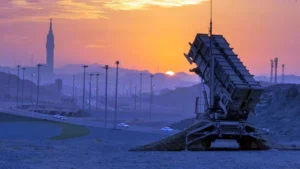
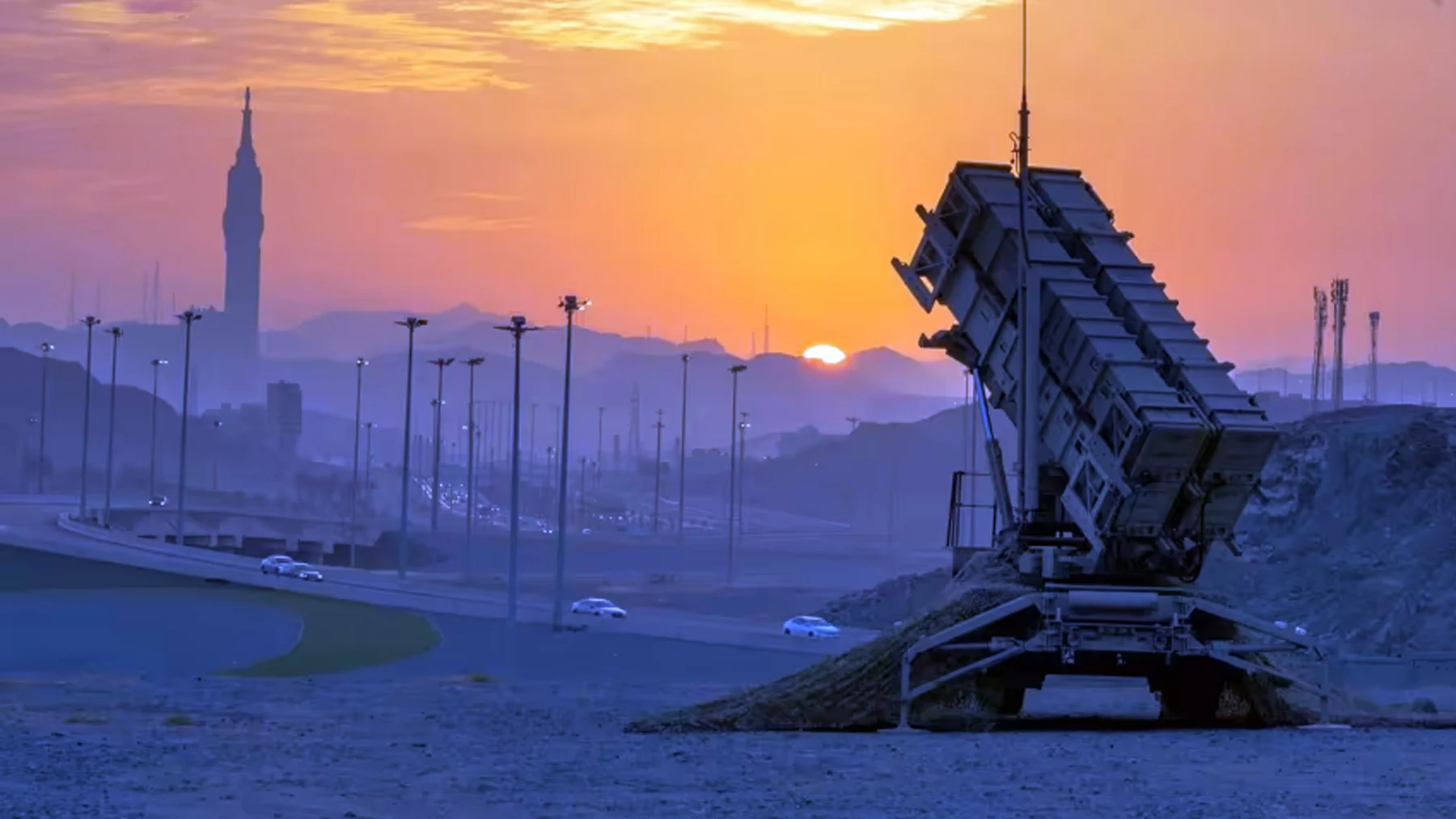
The reported attacks targeting Riyadh’s main airport have intensified concerns over the effectiveness of the country’s layered defence systems. According to figures from the Stockholm International Peace Research Institute (SIPRI), Saudi Arabia spent approximately $83 billion on defence last year, placing it among the world’s largest military spenders. Its arsenal includes American combat aircraft, Patriot missile batteries and the Terminal High Altitude Area Defense (THAAD) system, alongside advanced weapons acquired from European suppliers, including France and the United Kingdom.
However, the scale of Saudi Arabia’s security challenge extends far beyond the protection of its capital. The kingdom must defend oil refineries, pipelines, military installations, airports and other strategically important facilities spread across a vast territory. Threats can emerge from several directions, including Iran to the east, Iran-aligned armed groups operating in Iraq to the north, and Houthi forces based in Yemen to the south. The range and distribution of these potential threats place considerable pressure on surveillance networks, interception systems and military decision-making.
The source material reports that Iran launched approximately 1,000 missiles and drones towards Saudi targets during an intense phase of the conflict this year. Separately, Iran-aligned Iraqi armed groups have reportedly used drones against the kingdom’s strategically important East–West oil pipeline, while Houthi forces have continued developing their capacity to strike targets across the border from Yemen. Even when incoming weapons are intercepted successfully, defending numerous sites simultaneously requires difficult decisions about where limited military resources should be deployed.
Houthi tactics challenge conventional air defences
The Houthi movement has reportedly expanded its use of ballistic missiles, cruise missiles and long-range unmanned aerial vehicles in an effort to overwhelm opposing air-defence networks. Deploying different types of weapons in coordinated attacks can force defenders to identify, track and respond to multiple threats at the same time. Similar saturation tactics have featured in Russia’s attacks on Ukraine, where drones and different classes of missiles have been used in combination.
Cruise missiles flying at low altitudes can be particularly difficult to detect and track, while manoeuvrable ballistic missiles may complicate interception efforts. The Houthis have also claimed access to newer missile systems capable of changing direction during flight. Nevertheless, a weapon’s stated capabilities and battlefield performance are not necessarily identical, and such claims require independent verification.
Saudi Arabia has reportedly intercepted numerous incoming missiles and drones, but some weapons have penetrated its defences. The central problem is that no single air-defence system can guarantee protection against every incoming attack. A sophisticated defence network can reduce the risk of damage without eliminating it, particularly when an attacker launches several weapons in different trajectories or targets multiple locations.
International assessments have also raised questions about the origins of the Houthis’ military technology. United Nations experts have previously identified missile components, unmanned aerial systems and other military equipment of Iranian origin or design in Yemen despite international restrictions. Earlier assessments cited in the source material also described substantial external support involving equipment, technology, financing and training. Such findings indicate that the movement’s military development cannot be understood solely through its domestic capabilities.
The Houthi-operated Hatem-2 and Palestine-2 missile systems have been described by analysts as resembling Iranian weapons. Their claimed speed, range and precision have attracted attention among regional security observers. A missile launched by the Houthis also reportedly penetrated Israel’s air-defence network and struck near Ben Gurion Airport last year, highlighting the difficulties that advanced defence systems can face when confronting long-range attacks. The precise technical capabilities of individual systems, however, remain dependent on independently verified evidence.
Tehran’s influence and the prospects for negotiations
The Houthis have maintained close relations with Iran and have long been associated with the regional network commonly referred to as the “Axis of Resistance.” Although several Iran-aligned groups in the region have suffered military setbacks, the Houthi movement has retained considerable political and military influence. Its relationship with Tehran remains significant, but the movement also has its own priorities and calculations.
The conflict with Saudi Arabia has deep roots. Fighting between the two sides escalated after Saudi Arabia intervened in Yemen’s war in 2015. Years of hostilities inflicted severe humanitarian suffering on communities in Houthi-controlled areas, while restrictions on trade and transportation further complicated Yemen’s economic conditions.
The source material states that the Houthis subsequently threatened Saudi-linked shipping in the Red Sea and launched attacks against oil facilities and military airfields. The movement has demanded an end to Saudi military operations supporting Yemen’s internationally recognised government, as well as compensation for damage caused during the conflict.
Diplomatic efforts have emerged alongside the military confrontation. Iranian Foreign Minister Abbas Araghchi reportedly said on Monday that Tehran was prepared to provide whatever assistance was necessary to initiate negotiations between Riyadh and the Yemeni side. Such an offer could create an opening for dialogue, although the extent to which Iran can influence Houthi decisions remains an important question.
Mohammed al-Bukhaiti, a member of the Houthi political bureau, reportedly claimed that Riyadh had agreed to mediation. He also said the movement had rejected proposals for ceasefires lasting two weeks and one month. His remarks suggested that the group believed the current confrontation differed fundamentally from earlier rounds of fighting and warned that the consequences could grow more severe as hostilities continued.
For Saudi Arabia, negotiations could offer a route towards reducing the threat to its territory and critical infrastructure. Yet entering an agreement following deadly attacks could carry domestic political costs, especially if the outcome is perceived as allowing the Houthis to retain or strengthen their military position.
Security concerns threaten economic ambitions
Saudi Arabia has sought to maintain an image of stability despite the security challenges, presenting the country as a reliable destination for investment, tourism and international business. Missile and drone attacks, however, risk undermining that message.
The source material reports that Saudi civil-defence authorities temporarily stopped sending mobile-phone alerts about missile and drone threats before a series of attacks around Riyadh airport. Some residents subsequently reported that the warning system had resumed operation. Saudi officials also reportedly announced the interception of three ballistic missiles on Monday. These claims, including the circumstances surrounding the alert system, require confirmation from official statements and independent reporting.
The consequences extend beyond immediate casualties or damage to individual facilities. Airports are essential to tourism and international connectivity, while oil installations and pipelines underpin energy exports. Data centres and desalination plants are equally important because they support digital development and the kingdom’s water supply. Disruptions to these assets could affect economic activity even if the country’s principal oil infrastructure remains operational.
Saudi Crown Prince Mohammed bin Salman has pursued an ambitious programme to diversify the economy and attract foreign capital under the kingdom’s Vision 2030 agenda. Continued insecurity could complicate those efforts by raising concerns among investors about operational risks, infrastructure resilience and the predictability of the business environment.
The source material also indicates that some major companies were reluctant to attend an international petroleum conference in Riyadh amid the heightened tensions. If confirmed, such developments would underline how regional instability can influence commercial decisions beyond the immediate battlefield.
Why a ground offensive may prove costly
A renewed ground campaign against the Houthis would present its own formidable challenges. The movement has consolidated control over areas of Yemen, developed extensive combat experience and benefited from familiarity with the country’s difficult mountainous terrain. These advantages make a decisive military victory considerably more complicated than striking launch sites or infrastructure from the air.
The source material says Houthi forces have inflicted substantial losses on government troops over the past month and have surrounded Taiz, Yemen’s third-largest city and an important transport hub. The reported situation would represent a significant challenge for forces aligned with Yemen’s government, although the battlefield details need independent verification.
Previous military campaigns illustrate the limitations of air power alone. According to the material, the United States spent more than $1 billion on a seven-week air campaign against the Houthis last year. Although an understanding was reportedly reached concerning attacks on American vessels in the Red Sea, the movement retained its political and military presence and continued to demonstrate the ability to threaten advanced military equipment.
US and Israeli strikes have also reportedly killed Houthi commanders and technical specialists without dismantling the organisation’s leadership structure. Estimates cited in the source material suggest that the movement could have as many as 350,000 armed members, although the figure should not be treated as a verified count of active fighters.
The Institute for the Study of War was also cited as reporting that Houthi forces had encircled Taiz. If the situation persists, it could place additional pressure on Yemeni government forces and complicate efforts to restore stability through either military or political means.
Saudi Arabia seeks wider international support
Facing sustained pressure, Saudi Arabia has reportedly been working to secure broader international assistance against the Houthi threat. Regional partners have offered support, including potential contributions to air defence. Pakistan has sent thousands of troops to assist Saudi Arabia’s defence, according to the source material, while Egypt has indicated its willingness to provide assistance if required. The scope and terms of these arrangements should be confirmed through official announcements.
The conflict has also raised questions about the availability of missile interceptors and other advanced defence equipment. If Saudi Arabia’s existing stockpiles continue to decline, the kingdom may seek additional supplies from the United States and European countries. However, replenishment may not be immediate, particularly if other conflicts are placing pressure on the same manufacturers and supply chains.
A report by the US Department of Defense inspector general, as described in the source material, highlighted the depletion of strategic weapons inventories during operations against Iran and constraints affecting the defence industry’s ability to replace expended munitions. Such pressures could limit the speed at which additional equipment becomes available to American partners.
Political calculations in Washington add another layer of uncertainty. With US midterm elections approaching, President Donald Trump may be reluctant to commit American forces directly to another prolonged confrontation in the Middle East. The source material indicates that he has neither firmly committed to direct US action against the Houthis nor completely ruled it out.
Michael Ratney of the Center for Strategic and International Studies, a former US ambassador, has argued that Washington’s reluctance to become directly involved could reinforce perceptions that the United States might not support a partner at a moment of acute need. At the same time, Ratney has suggested that diplomacy may ultimately offer the most realistic route towards reducing the conflict’s intensity, even if any agreement falls short of the parties’ expectations.
For Saudi Arabia, the choices are increasingly difficult. Expanding military operations could increase the risk of further missile and drone attacks, while negotiations could allow the Houthis to preserve their influence. Neither approach guarantees a lasting settlement.
Ultimately, the confrontation is about more than the performance of individual weapons systems. It reflects the challenge of protecting critical infrastructure across a vast territory, managing a regional security rivalry and maintaining economic confidence amid persistent instability. Whether Saudi Arabia can combine stronger defences with effective diplomacy may determine not only the immediate trajectory of the conflict but also the security of the kingdom’s long-term development plans.