Indonesia’s Worsening Wildfires Send Toxic Haze Across Southeast Asia, Triggering School Closures
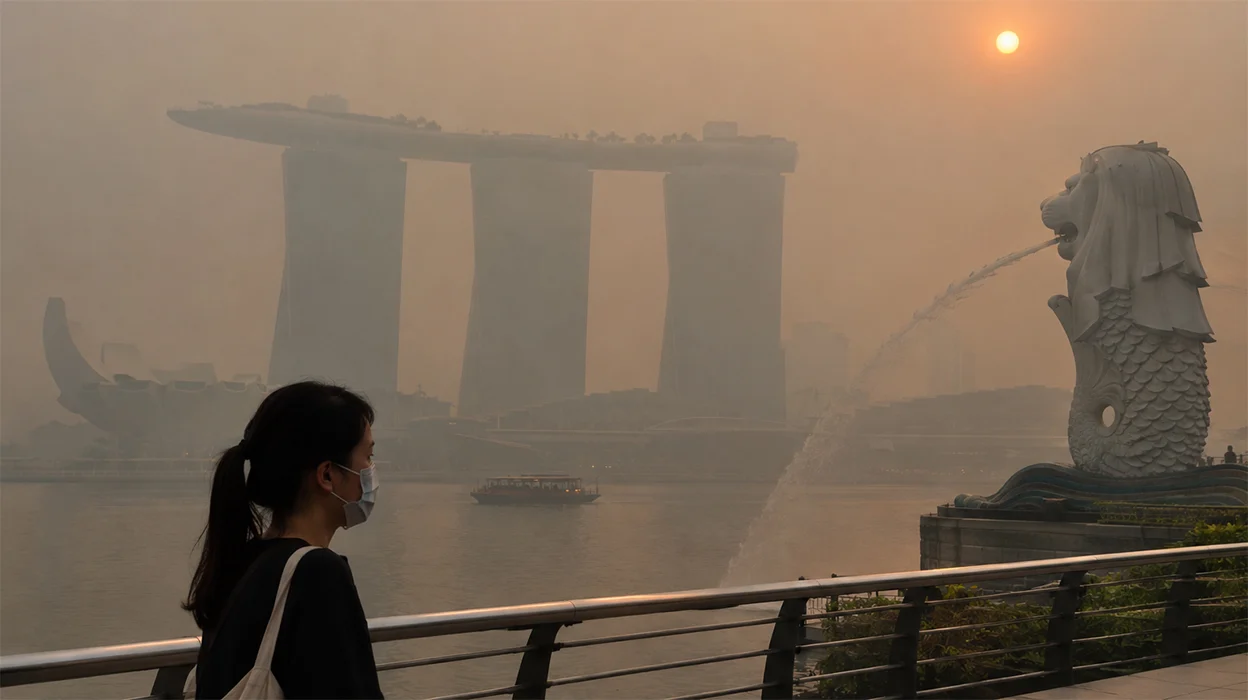

GNN, JAKARTA, Indonesia — Intensifying wildfires in Indonesia are sending thick smoke and hazardous haze across Southeast Asia, deteriorating air quality in neighbouring countries and prompting emergency measures to protect public health. Singapore has recorded its highest pollution levels of the year, while East Timor has announced a three-day suspension of in-person schooling in response to airborne pollutants drifting from fires in neighbouring areas.
According to Reuters, hourly PM2.5 concentrations in western Singapore reached 284 micrograms per cubic metre on Wednesday, placing pollution in the “very high” category under the country’s national environmental classification. It was the first time during the current haze episode that pollution had reached this level. East Timor’s government announced that classroom teaching would be suspended from October 15 for three days, citing the health risks posed by pollutants originating from wildfires in neighbouring territories. Although the official statement did not identify Indonesia by name, East Timor shares an island with Indonesia’s East Nusa Tenggara province.
Indonesia Faces Its Most Intense Wildfire Season in 11 Years
Indonesia is battling its most severe wildfire conditions in more than a decade, with dry weather associated with the El Niño climate phenomenon contributing to the spread of fires. The resulting smoke has worsened respiratory health concerns within Indonesia and caused significant deterioration in air quality across the wider region. Malaysia has also experienced the consequences, with schools in several states previously forced to close because of the haze. The crisis has renewed concerns over the vulnerability of Southeast Asian countries to transboundary air pollution during prolonged dry seasons.
One of the biggest obstacles facing firefighters is the spread of flames through peatlands, where partially decomposed organic material accumulates beneath the ground. Fires in these areas can continue smouldering underground even when surface flames appear to have been extinguished, making them difficult to contain and capable of reigniting unexpectedly. Indonesia’s disaster-management authorities have warned that sustained rainfall may be the only effective long-term solution to the persistent peat fires. Meanwhile, images released by local media show Palangka Raya, the capital of Central Kalimantan, shrouded in dense yellowish haze, with visibility on roads significantly reduced as firefighters use water to tackle blazes near peatland areas.
Respiratory Illnesses Surge as Pollution Reaches Dangerous Levels
The scale of the public health emergency is becoming increasingly evident. Indonesian environmental ministry data showed that the Air Pollution Standard Index (ISPU) in parts of Central Kalimantan exceeded 1,200 on Wednesday, more than four times the threshold of 300 classified as hazardous. Authorities also reported that 277,075 cases of respiratory illness associated with fires and haze had been recorded across seven Indonesian provinces by October 12. That figure represents more than double the 113,336 cases reported in figures released on September 9, highlighting the rapidly escalating health burden. The current situation has drawn comparisons with October 2015, when Indonesian fires pushed PM2.5 concentrations in western Singapore to 471 micrograms per cubic metre, the highest level recorded in the city-state’s national history.
More Than 69,000 Firefighters Mobilised
Indonesian President Prabowo Subianto has instructed authorities to deploy additional resources to contain the fires. Honi Havana, an official from the coordinating ministry responsible for political and security affairs, said at a news conference on Wednesday that all available resources were being mobilised for firefighting operations. According to Havana, more than 69,000 firefighters have been deployed, up from approximately 44,000 in mid-September. Authorities are also testing new techniques involving specialised chemicals intended to improve firefighting effectiveness. However, the persistent underground combustion of peat deposits continues to complicate containment efforts, raising concerns that the crisis could persist until weather conditions change significantly.
Regional Pressure Mounts on Jakarta
Indonesia is facing growing diplomatic pressure as affected countries seek stronger regional cooperation to address the recurring haze crisis. The issue is expected to feature in discussions at an upcoming meeting of the Association of Southeast Asian Nations (ASEAN) next month. Malaysian lawmaker Syed Saddiq Syed Abdul Rahman called on Southeast Asian governments on Tuesday to consider a joint diplomatic protest against Jakarta, arguing that Indonesia needed to do more to control the fires. He also urged affected countries, including Malaysia and Singapore, to coordinate their response and called on banks in both countries to stop financing companies associated with land-clearing practices that involve burning.
Cross-border haze has remained a longstanding environmental and diplomatic challenge in Southeast Asia, particularly when prolonged drought allows fires to spread through forests and peatlands. The latest emergency has once again exposed the difficulty of containing pollution within national boundaries when smoke travels across the region. With respiratory illnesses rising, schools suspending classroom activities and firefighting resources stretched, the crisis is increasing pressure on Indonesia and its neighbours to strengthen prevention measures, improve regional coordination and hold those responsible for illegal land burning accountable.