
US, China Unveil Tariff-Cut Lists Covering $60 Billion in Bilateral Trade
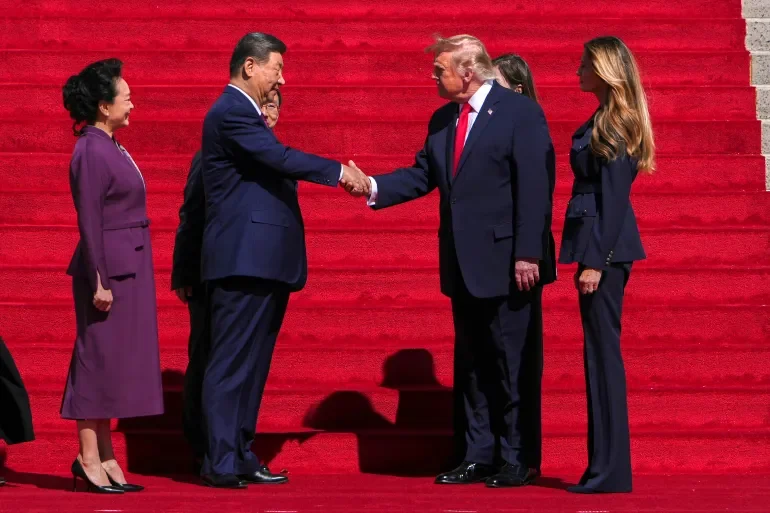

GNN, WASHINGTON — The United States and China have announced reciprocal tariff-reduction plans covering approximately $60 billion worth of bilateral trade, following a meeting between US President Donald Trump and Chinese President Xi Jinping in Washington. The two countries have each identified goods worth around $30 billion for more favourable tariff treatment, marking a new step towards easing trade tensions between the world’s two largest economies.
The product lists were released on September 28, days after the Trump–Xi meeting during the Chinese president’s state visit to the United States. Under the proposed arrangement, China has identified 1,619 categories of American goods for tariff reductions, while the United States has listed 77 categories of Chinese imports. The initiative is being pursued through the US-China Board of Trade, established to address trade-related issues and improve market access between the two countries.
China’s list includes agricultural products, medical equipment, timber, coal, dairy products, seafood and other commodities imported from the United States. The reductions are expected to provide American farmers, manufacturers and exporters with greater access to the Chinese market. China’s Ministry of Commerce said the arrangement would help strengthen trade cooperation and promote more stable economic and commercial relations between the two countries.
On the American side, the tariff-reduction list covers Chinese products such as fireworks, kitchenware, household appliances, toys, glass and wooden decorative items, sporting goods and footballs. The inclusion of consumer goods is expected to provide Chinese exporters with improved access to the US market while offering American consumers a wider range of imported products under more favourable tariff conditions.
According to China’s commerce ministry, more than 90 per cent of the listed products will receive treatment under most-favoured-nation tariff rates, effectively removing country-specific tariffs on those items. However, the two governments have not fully clarified the implementation timetable or the precise tariff reductions for every product. The final measures will be implemented through the respective countries’ domestic legal procedures.
Despite the agreement, several strategically important sectors remain outside the tariff-reduction framework. Semiconductors, electric vehicles and batteries have not been included in the current lists, reflecting the continuing differences between Washington and Beijing over technology, industrial competition and supply chains. The two countries have also continued discussions on agricultural market access, investment and other economic issues through bilateral mechanisms.
The announcement comes amid efforts by both governments to stabilise economic relations following an extended period of tariff disputes and retaliatory trade measures. Although the new framework provides opportunities for exporters and businesses on both sides, analysts have noted that its overall impact may remain limited compared with the scale of bilateral trade. The agreement is part of broader negotiations aimed at maintaining the trade truce and creating space for further economic dialogue between the United States and China.