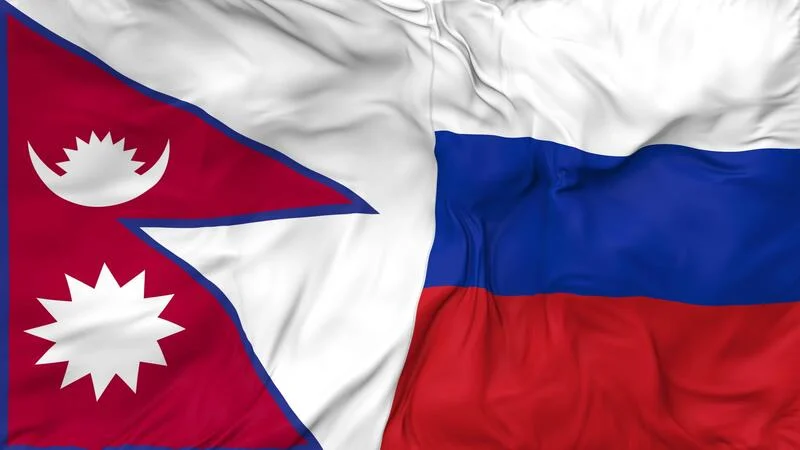
GNN, KATHMANDU: Nepal and Russia are holding the third meeting of their Bilateral Consultation Mechanism in Kathmandu on Wednesday, as the two countries mark the 70th anniversary of the establishment of diplomatic relations.
The Nepali delegation will be led by Foreign Secretary Amrit Bahadur Rai, while the Russian side will be headed by Deputy Foreign Minister Andrey Rudenko, who is currently visiting Nepal. The meeting is expected to provide an opportunity for the two sides to review the overall state of bilateral relations and discuss ways to further strengthen cooperation.
Nepal and Russia signed a protocol on bilateral consultations in 1995 with the objective of maintaining regular dialogue and exchanging views on bilateral, regional and international issues. The first meeting of the mechanism was held in Moscow in 2007, while the second meeting took place in Kathmandu on April 17, 2018.
The discussions are expected to focus on expanding cooperation in trade, investment, tourism, education, culture and technical assistance. The two sides are also expected to exchange views on regional and international developments and explore greater cooperation through multilateral forums.
The meeting comes a day after Deputy Foreign Minister Rudenko expressed Russia’s solidarity with Nepal over the loss of lives and property caused by recent floods. Speaking at an “Open Dialogue” hosted by the Russian Embassy in Kathmandu on Tuesday evening, Rudenko conveyed his condolences to the Government and people of Nepal.
Rudenko also praised Prime Minister Balendra Shah for highlighting the risks Nepal faces from climate change at the United Nations General Assembly. He described climate change as an “alarm bell” for the world and said Russia was prepared to extend support to Nepal within its capacity during times of disaster.
Despite Russia itself facing a range of challenges, Rudenko said Moscow was ready to make every possible effort to provide assistance required by Nepal. His remarks come amid growing international attention to Nepal’s vulnerability to climate-related disasters, including floods, landslides and other extreme weather events.
Education and people-to-people relations also featured prominently in the Russian delegation’s message. Rudenko said 52 scholarships would be made available to Nepali students for the upcoming academic year to pursue higher education in Russia. He described education, culture and people-to-people contacts as important foundations of Nepal–Russia relations and expressed Russia’s commitment to continuing cooperation in these areas.
During Rudenko’s visit, the Nepali side is also expected to raise concerns related to Nepali citizens recruited into the Russian military, the status of missing and deceased Nepali nationals, and compensation for their families. These issues have emerged as important and sensitive areas in the bilateral relationship.
The two sides are further expected to discuss regional and international issues of common interest and ways to strengthen coordination at multilateral forums. Moscow has reiterated that it attaches significant diplomatic importance to its longstanding relationship with Nepal, while Kathmandu is seeking to expand bilateral cooperation across economic, educational, cultural and humanitarian areas.