
Opens in a new tab

World Sight Day Highlights the Need for Greater Eye Health Awareness in Nepal

GNN
Published on 7:43 am
174Shares

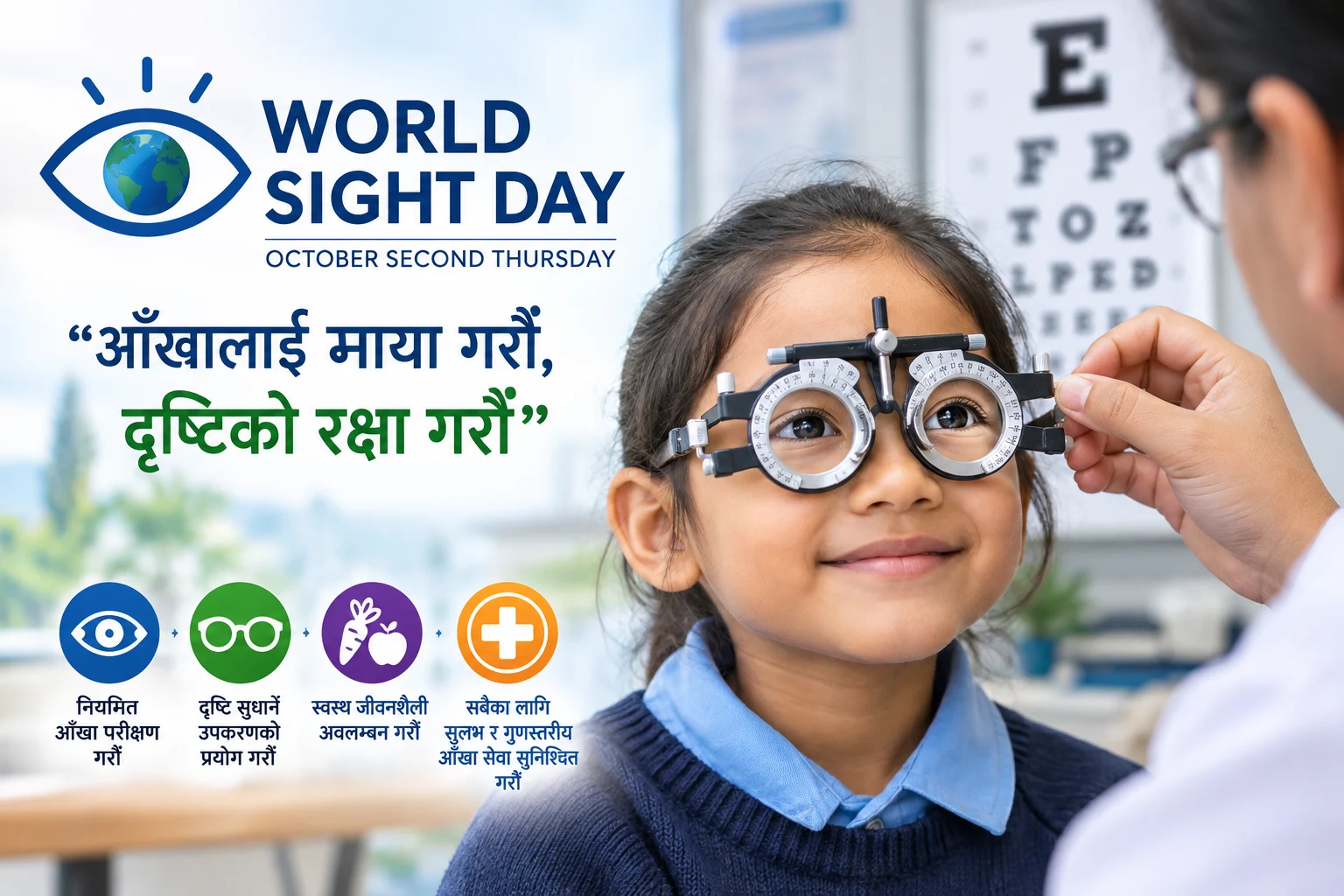
GNN,Kathmandu — Nepal is observing World Sight Day today with a range of awareness and health-related programmes under the theme “Love Your Eyes, Protect Your Sight.” Observed annually on the second Thursday of October, the global campaign seeks to promote eye health and encourage individuals to take greater responsibility for protecting their vision.


This year’s theme also calls on governments and stakeholders to ensure accessible, affordable and quality eye-care services for all. It highlights the importance of expanding eye screening and awareness programmes in schools, workplaces and policy-making institutions, where early detection can help prevent avoidable vision loss.

Nepal has made significant progress in reducing blindness over the past several decades. According to the Rapid Assessment of Avoidable Blindness (RAAB) survey conducted in 2022, the prevalence of blindness in Nepal had declined to 0.28 per cent, compared with 0.84 per cent in 1981. However, health experts caution that declining blindness rates do not mean that the country has eliminated wider eye-health challenges.

According to Dr Shailesh Kumar Mishra, Executive Director of the Nepal Netra Jyoti Sangh, conditions such as glaucoma, retinal diseases, diabetes-related vision problems, age-related eye disorders and refractive errors remain major concerns. Increasing life expectancy, the growing burden of non-communicable diseases, changing lifestyles and widespread use of digital devices are also creating new risks for eye health.

The Nepal Netra Jyoti Sangh says it has so far provided eye-care services to more than 50.2 million people and performed 5,659,624 eye surgeries. Through its network of 28 eye hospitals, 44 district branches and 226 treatment centres, the organisation has been providing services to Nepali citizens as well as people from other countries.

On World Sight Day, eye-health professionals are urging people to prioritise regular eye examinations, early diagnosis and timely treatment. They have particularly emphasised the need for routine screening among children, older people, individuals living with diabetes and those who spend long periods using smartphones, computers and other digital devices.