Federation Prepares to Raise Religious Pressure on Christians with International Bodies if It Persists

GNN, Kathmandu, Nepal — The National Christian Federation Nepal (FNCN) has said it is preparing to raise concerns with relevant international human rights bodies, including United Nations mechanisms, if religious pressure, discrimination and unequal treatment against Nepal’s Christian community continue.
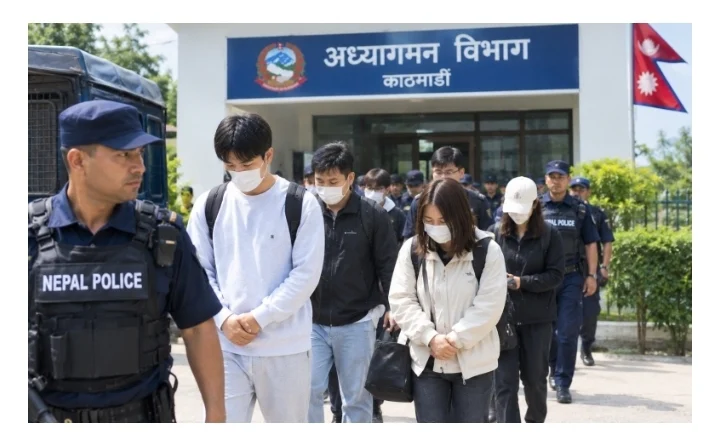
FNCN spokesperson Chet Kumar Shrestha said the federation was seriously concerned about the state of religious freedom and the rights of Christian minorities in Nepal, including the recent detention of 24 South Korean nationals in Sundarharaicha Municipality, Morang District, over alleged involvement in religious activities. He stressed that any concerns regarding religious activities must be addressed through impartial investigations and due legal process, without targeting an entire religious community.
According to a report published by Breaking Nepal on October 9, 2026, the 24 South Korean nationals were detained after attending a graduation ceremony and religious programme at Nepal New Covenant College, located in the Sundar Danda area along Malati Marg in Ward 9 of Sundarharaicha Municipality. They were subsequently sent to the Department of Immigration in Kathmandu. Authorities reportedly initiated an investigation after receiving information that the individuals had entered Nepal on tourist visas and were involved in religious education, training and propagation activities. However, detention alone does not establish guilt, and the circumstances must be assessed through a fair and transparent legal process.
Shrestha said that foreign nationals found to have violated Nepal’s laws should be dealt with in accordance with the law. However, he cautioned against using an individual case to cast suspicion on the wider Christian community, stigmatise people because of their faith, or impose unnecessary pressure on churches and religious institutions. According to him, a secular state must ensure equal rights, protection and treatment for people of all religious backgrounds. Law enforcement should be impartial and must not create the perception that a particular religious community is being selectively targeted.
Nepal’s Constitution defines the country as secular under Article 4, guarantees equality under Article 18, and protects religious freedom under Article 26. These constitutional provisions provide an important framework for protecting religious minorities and ensuring equal treatment under the law. FNCN maintains that hate speech, discrimination based on religious belief and actions that undermine constitutionally protected rights should not be tolerated, whether they occur in public spaces or political institutions. While violations of laws governing religious conversion may be investigated and prosecuted where evidence supports such action, voluntary prayer, Bible study, participation in religious programmes and the peaceful practice of faith should not automatically be treated as criminal conduct.
Concerns over religious freedom in Nepal have also emerged in previous cases involving both Nepali and foreign Christians accused of religious conversion. According to the US Department of State’s 2016 International Religious Freedom Report, eight Christians were arrested in Dolakha on allegations of distributing Christian books to students. The report stated that a district court subsequently acquitted them of all charges. Such cases underline the importance of distinguishing allegations from proven offences and respecting judicial independence. Each case must be assessed on its own evidence, with due process guaranteed to all individuals involved.
International attention to the persecution of Christians and religious freedom has also featured in broader political discussions. US President Donald Trump addressed the persecution of Christians in different parts of the world during his remarks at the 81st session of the United Nations General Assembly in September 2026. The issue has renewed attention to the protection of religious communities and the responsibility of governments to uphold freedom of belief. FNCN says Nepal’s approach to religious minorities should likewise be guided by constitutional guarantees and internationally recognised human rights principles.
Shrestha said the federation was considering available legal and diplomatic avenues to bring concerns about religious pressure and discrimination to the international level if the situation continued. Preparations may include submitting documented complaints and communications to relevant United Nations human rights mechanisms, the UN Special Rapporteur on freedom of religion or belief, and other appropriate international bodies. He emphasised that any submission would need to be supported by facts and evidence.
The federation has urged the government to fulfil its constitutional obligations, strengthen the protection of religious minorities, and ensure that investigations involving religious matters are conducted fairly and transparently. Shrestha said complaints of religious discrimination and pressure should be taken seriously and addressed through appropriate legal and administrative mechanisms. If the concerns remain unresolved, he said, FNCN is prepared to intensify its advocacy at both national and international levels.
The central responsibility of a secular state is not to favour one religion over another, but to protect the freedom, dignity and human rights of all citizens. Ensuring an impartial investigation into the detention of the South Korean nationals is important, as is preventing the wider Christian community from being unfairly stigmatised or subjected to undue pressure. Religious freedom is not a privilege reserved for any one group; it is a fundamental right essential to democracy, equality and the rule of law.