Nepal Must Link Climate Data with Financial and Policy Decisions, Says Finance Minister Wagle at COP31
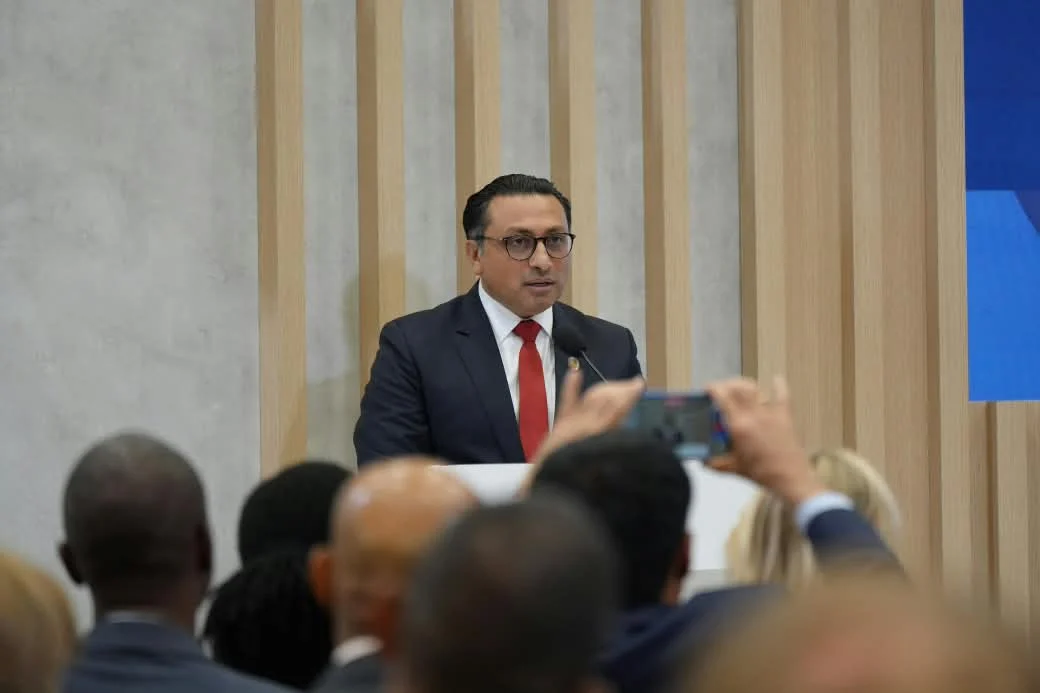

GNN, Antalya, Türkiye: Nepal’s Finance Minister Dr. Swarnim Wagle has said that the country’s primary challenge is not a lack of weather and climate data, but its inability to effectively translate available information into financial and policy decisions.
Addressing a high-level event on Tuesday during the 31st Conference of the Parties (COP31) to the United Nations Framework Convention on Climate Change (UNFCCC) in Antalya, Türkiye, Minister Wagle emphasised the need to integrate weather and climate observations into financial protection mechanisms and risk management systems.
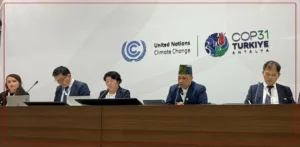
Speaking at an event on the Systematic Observations Financing Facility (SOFF), held at the UNFCCC Pavilion, Wagle highlighted the importance of using reliable climate data to strengthen financial preparedness against climate-related disasters. He cited the Bhotekoshi–Trishuli floods as a significant example of the shortcomings in Nepal’s existing early warning and financial risk management systems.
According to Wagle, Nepal’s existing credit facility triggers, insurance indicators and early warning instruments were largely based on rainfall measurements and river water levels. However, the devastating floods occurred without significant rainfall, meaning the existing monitoring mechanisms failed to identify the actual warning signals and adequately capture the scale of the emerging risk.
“Nepal is not a country without data. The gap I want to highlight is not between a country and its data, but between data and decision-making,” Wagle said.
He further explained that weather and climate observations form the foundation of effective financial instruments. Without reliable data, countries cannot establish appropriate risk triggers, implement parametric insurance or ensure predictable and pre-arranged financial assistance when disasters strike.
“No data means no triggers. No triggers mean no parametric insurance. No insurance means no pre-arranged finance. What remains is finance in the form of loans — expensive loans,” he said.
Wagle also stressed that developing countries, particularly those with limited resources and high exposure to climate-related hazards, face increasing financial and institutional challenges as climate change intensifies. He called for greater international investment in fundamental weather and climate observation systems, scientific research, data collection and risk assessment.
Describing Nepal as a country that has effectively become a laboratory for climate-related risks, he argued that the nation must strengthen its scientific capacity to understand not only rainfall patterns but also the geological and geographical factors contributing to disasters, particularly in mountainous regions.
“Let us invest at the foundational level. Let us build upon it together, so that the next finance minister coming to this platform will have triggers that can read not only rainfall but also mountains,” he said.
Referring to the lessons Nepal has learned from climate-related disasters in 2026, Wagle called for stronger international cooperation to ensure that the experiences of vulnerable countries contribute to global climate preparedness. He emphasised that no country should have to repeatedly suffer similar disasters simply to learn lessons that could have been shared and applied through international collaboration.
He concluded by underscoring the importance of strengthening climate observation infrastructure and connecting scientific evidence with financial decision-making to ensure timely, predictable and affordable support for countries increasingly exposed to climate-related disasters.