Nepal Calls for Climate Justice, Compensation and Grants at COP31
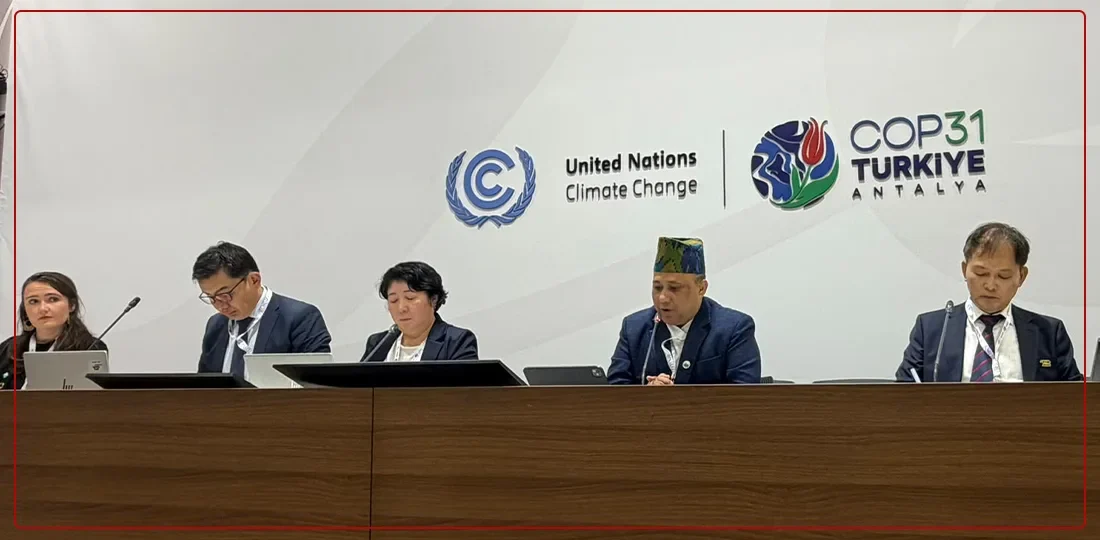

GNN, Antalya, Turkey: Nepal has called for climate justice, adequate compensation and grant-based financial support for vulnerable countries at the 31st United Nations Climate Change Conference (COP31), currently underway in Antalya, Türkiye. The Nepali delegation is seeking to draw international attention to the disproportionate consequences of climate change faced by countries that have contributed minimally to global greenhouse gas emissions but are suffering some of its most severe impacts.
Nepal has particularly highlighted the growing threats posed by climate change to mountainous regions, warning that rising temperatures, melting glaciers, unpredictable rainfall and increasingly frequent extreme weather events are putting Himalayan ecosystems and the livelihoods of millions of people at risk. The delegation has urged the international community to recognise the vulnerability of mountain nations and take meaningful action to address their specific climate-related challenges.
The Nepali representatives have also called for maintaining the global temperature limit at 1.5 degrees Celsius, emphasising that limiting warming is essential to protecting the Himalayan region from irreversible environmental damage. Nepal has stressed that the consequences of exceeding this threshold could be devastating for mountain communities, water resources, biodiversity and downstream populations that depend on Himalayan rivers.
Despite Nepal’s diplomatic efforts, securing substantial commitments at the conference remains challenging. Differences among major industrialised nations over climate finance, compensation for climate-induced losses and damages, and the responsibilities of historically high-emitting countries have complicated negotiations. The apparent reluctance of some major economies to make stronger financial commitments has raised concerns about the prospects of achieving meaningful outcomes for climate-vulnerable nations.
For Nepal, the key objective at COP31 is to translate international climate commitments into practical financial and policy measures, particularly through grants rather than additional loans. The country is seeking fair compensation for climate-related losses and stronger international support for adaptation, resilience and disaster recovery. However, unless major industrialised nations demonstrate greater political commitment and financial responsibility, Nepal’s expectations for substantial progress at the conference may remain largely unfulfilled.