Discrimination Even in Death: Faguni Pariyar’s Burial Raises Questions over the State’s Duty to Protect Religious Freedom
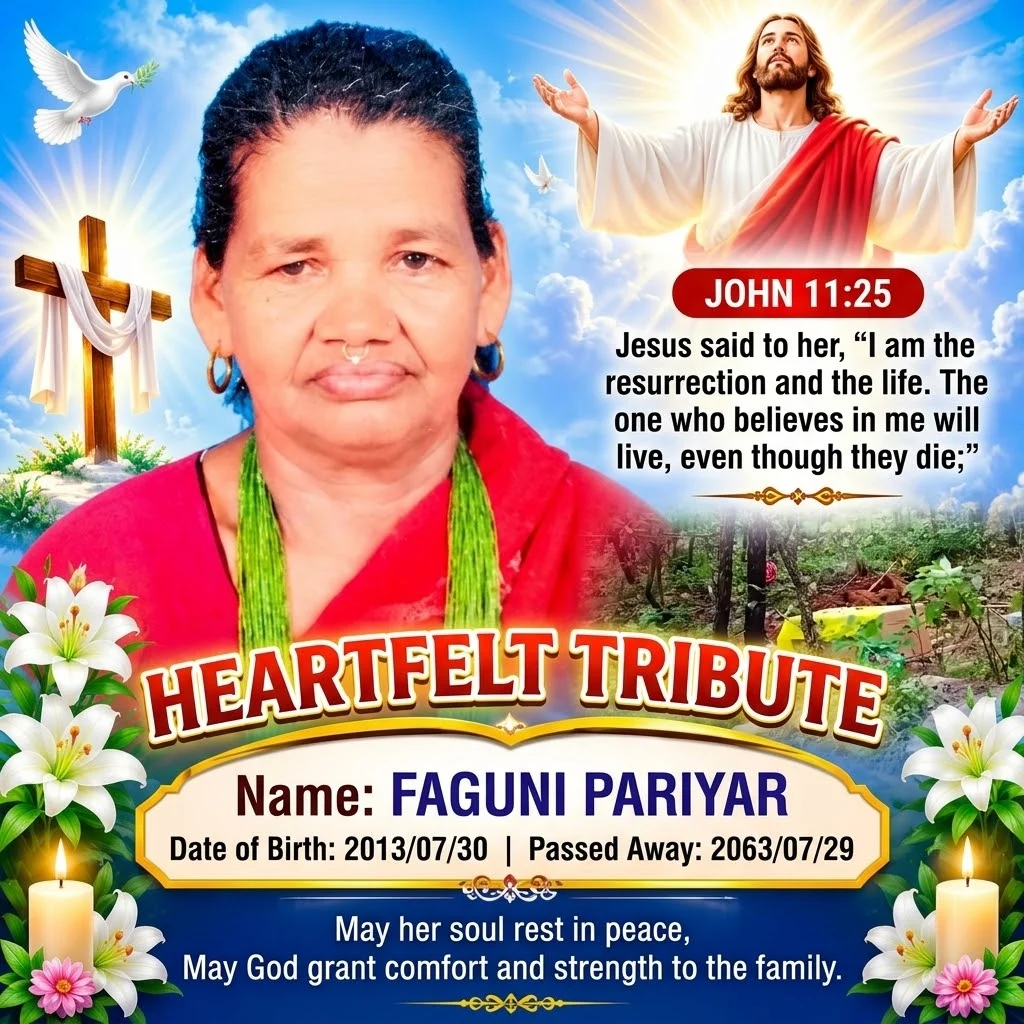

GNN, NEPAL — A dispute over the burial of 70-year-old Faguni Pariyar in Sharda Municipality–2, Salyan District, has exposed persistent concerns over religious and caste-based discrimination in Nepali society, raising serious questions about the state’s responsibility to protect the fundamental rights and dignity of all citizens.
The controversy arose while preparations were under way to dig a grave for Pariyar, disrupting the family’s ability to carry out her final rites in accordance with their religious faith. The matter was eventually resolved following an all-party consultation facilitated by Salyan Chief District Officer Bandana Kumari KC, with coordination from Padam Bahadur Gaire, Karnali Province Chief of the National Christian Federation Nepal (NCFN). Following the discussions, Pariyar’s mortal remains were laid to rest in a community forest within the same ward, according to the Federation.
The incident raises a fundamental question: why should a family have to rely on administrative intervention and repeated negotiations to exercise its right to conduct the final rites of a deceased relative according to its religious beliefs?
The obstruction of burial arrangements on grounds potentially linked to religious or caste identity is deeply troubling. Such incidents undermine social harmony, religious tolerance and the basic principles of human dignity. The fact that a family may encounter difficulties even in arranging a dignified burial highlights the gap between constitutional guarantees and their practical implementation.
The National Christian Federation Nepal has expressed its appreciation to Chief District Officer KC and Federation provincial chief Gaire for their roles in resolving the dispute. It has also acknowledged the contributions of other stakeholders who assisted in facilitating a peaceful resolution.
NCFN Central Chairperson Rev. Uddhab Prasad Chimoria has expressed serious concern over the incident, emphasising that no citizen should face discrimination or obstruction in conducting funeral rites because of their religion, caste or personal beliefs.
The Federation has called upon local governments, district administrations, provincial authorities and the federal government to introduce effective measures to prevent similar incidents and ensure that every citizen can exercise their religious rights without fear, intimidation or unnecessary obstruction.
Nepal’s Constitution guarantees the right to equality under Article 18 and the right to freedom of religion under Article 26. However, incidents such as this raise concerns about the effective enforcement of these constitutional protections, particularly for religious minorities and historically marginalised communities.
A person’s death should never become a source of humiliation, discrimination or social conflict because of their religious beliefs or caste identity. Funeral rites are not merely religious observances; they are also deeply connected to the dignity of the deceased, the emotional well-being of bereaved families and the fundamental values of a humane society.
While the eventual resolution of the dispute is welcome, important questions remain unanswered, including the circumstances that led to the obstruction, the responsibilities of the parties involved and the measures authorities intend to take to prevent similar incidents in the future.
Administrative mediation may have resolved the immediate dispute, but it does not, by itself, address the underlying problem. The lasting solution lies in ensuring that constitutional rights are respected and protected in everyday life, without discrimination based on religion, caste or belief.
Ultimately, the responsibility to safeguard citizens’ rights does not rest solely with individual families or religious organisations. It is a fundamental obligation of the state. Every person deserves the right to a dignified burial in accordance with their faith, and no family should have to struggle for that basic human dignity.
Humanity must stand above religion and caste. Ensuring the right of every citizen to a dignified final farewell is not an act of favour; it is a constitutional, moral and humanitarian responsibility of the state.